In brief
Experts expressing concern over the integrity of the report question its reliability due to baseless citations and erroneous claims.
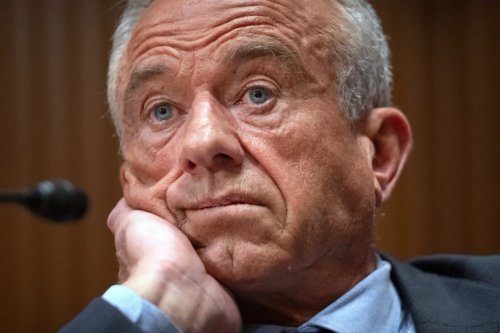
A controversial U.S. government report regarding children's health has sparked significant criticism after it was revealed to contain references to "totally fabricated" studies. The findings were called into question by academics who had been incorrectly listed as authors of these non-existent works. Initially released on May 22, the report aimed to shed light on what it termed a "chronic disease crisis" impacting children across the nation. However, an amended version was subsequently published on May 29 following an investigation by digital media outlet NOTUS, which uncovered at least seven entirely made-up sources cited within the report.White House press secretary, Karoline Leavitt, acknowledged "formatting issues" but asserted that the report's core conclusions remained valid despite the discrepancies. The department responsible for the report is led by US Health Secretary Robert F Kennedy Jr., known for his promotion of discredited theories linking vaccines to autism. This report stems from an initiative linked to one of President Donald Trump's executive orders, aimed at analyzing the rising chronic illness rates among children and potential underlying factors.The "Make America Healthy Again Commission" produced the report, attributing chronic conditions in children to various factors such as poor nutrition, environmental toxins, stress, lack of exercise, and what they term "overmedicalisation." However, several academics cited in the document have publicly disavowed its claims. For instance, Guohua Li, a professor at Columbia University, expressed astonishment upon learning of his supposed authorship of a study on children's mental health during COVID-19, labeling the citation as "totally fabricated." His co-author, Noah Kreski, corroborated that no such study exists.Katherine Keyes, another epidemiology professor mistakenly included as an author, raised concerns about the implications of such citation practices in scientific reporting. Additional scrutiny revealed that a study referenced concerning advertising psychotropic medications for youth was also misattributed, as confirmed by the university that employs the purported author.In light of these revelations, the Democratic National Committee criticized RFK Jr.'s Department of Health and Human Services for relying on dubious sources to validate its policy directions, stating that the report is marked by egregious citation errors, including broken links and incorrect conclusions. Since taking office in February, RFK Jr. has implemented significant cuts to the health department’s workforce while proposing for all new vaccines to undergo placebo trials—a move that reflects his controversial stance on vaccine safety.