In brief
Following the March earthquake's destruction in Nay Pyi Taw, Myanmar's military rulers have declared a comprehensive redesign of the city.
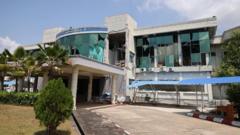
The layout of Myanmar's capital city, Nay Pyi Taw, is set to undergo significant changes after the disastrous earthquake that struck last month, reportedly killing over 3,500 individuals and injuring thousands more. During a government meeting, Senior General Min Aung Hlaing highlighted the critical need for rebuilding structures capable of withstanding future seismic events. The March 28 earthquake, measuring 7.7 in magnitude, not only devastated Nay Pyi Taw but was also felt across borders in Thailand and southwestern China. Reports indicate that approximately 70% of government buildings in the capital sustained damage from the quake, leading to relocations of some offices to Yangon. The military government is actively conducting soil tests to identify stable foundations for new constructions, alsothey've stated that the new office buildings must be constructed with earthquake resilience in mind. Save for a few structures, most of the damaged buildings remain unrepaired. Nay Pyi Taw, a planned capital established in 2005, is a vast city covering four times the area of London yet is sparsely populated. The strategic move of the capital, some 370 km from Yangon, has long been shrouded in mystery. Despite its grand infrastructure—such as wide roads, luxury hotels, and recreational facilities—Nay Pyi Taw lacks bustling activity typical of populous cities.The recent earthquake occurred amid ongoing civil conflict in Myanmar, after the military seized control in 2021. While a 20-day ceasefire was declared on April 2 to facilitate relief operations, reports persist of military actions against rebel territories. Buildings crucial to government operations, such as the Ministry of Labour and Ministry of Planning, have been particularly impacted. Relocative measures include moving important documents and vital equipment out of damaged structures. Staff at cultural institutions like the National Museum are also scrambling to safeguard valuable archives, manuscripts, and extensive book collections from the debris. With the reconstruction effort projected to take years, some ministries have already chosen to establish temporary offices in safer areas, such as the open-air "hotai" halls within Nay Pyi Taw.