
In brief
Yemen's humanitarian crisis deepens as aid workers, including those from NGOs, face arrests by Houthi rebels. The climate of fear leads to diminished operations, affecting millions reliant on assistance, amid international aid funding freezes.
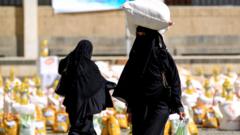
In light of the dire humanitarian conditions in Yemen, a recent wave of arrests targeting aid workers has left many in shock, further complicating efforts to assist a population in desperate need. A struggling nation, where nearly half the population requires urgent humanitarian aid, has seen increasing hostility against NGO personnel, particularly after a series of incidents that escalated fears and reduced operational capabilities.Hanaa, an employee at a US-funded NGO dedicated to empowering women, recounted a traumatic experience at work where she discovered her office ransacked, with her boss arrested and critical resources confiscated. The Houthi rebels' recent crackdowns have made the work environment perilous for humanitarian aid providers, with 24 UN employees and various local and international NGO staff detained in recent months.The fallout from these detentions has sent shockwaves through the humanitarian community. Many workers, like Hanaa, now grapple with the real possibility of increased targeting due to their affiliations with foreign-funded projects. Hanaa's fears were compounded by a pro-Houthi broadcast linking former US embassy personnel to accusations of espionage, further stigmatizing aid workers in the eyes of the public.The situation is exacerbated by an alarming increase in internally displaced persons, with approximately 4.5 million people uprooted throughout Yemen. The conflict, which began over a decade ago, continues to ravage the country and hinder aid efforts. Hanaa revealed that the ongoing uncertainty has led many NGOs to scale back operations, threatening the already fragile existence of those impacted by the ongoing conflict.International assistance has been greatly affected by recent shifts in US policy, including the designation of the Houthi rebels as terrorists by President Trump -- a move feared to put humanitarian workers at even greater risk. The interruption of funding from USAID has left many NGOs unable to provide essential services, just as they were stepping up to respond to the escalating crisis.For families like Amal's, the consequences are dire. Living in a makeshift camp with nine children, Amal struggles to feed her family, reliant on dwindling resources offered through the UN's World Food Programme. "If this supply line provided by NGOs is cut, my children might die," she implores, highlighting the catastrophic repercussions of reduced aid. The dire need for aid is evident: about 10 million children in Yemen are currently facing urgent challenges. As clinics operate with scarce medicine and families suffer from malnutrition, the humanitarian aid landscape grows darker amidst the crackdown on workers.With the UN firmly condemning the detentions as dangerous to their mission and calling for the immediate release of all detainees, time is running out for countless families in Yemen. Workers like Hanaa and Amal remind the world of the resilience needed to navigate an increasingly hostile environment, vowing to continue their efforts to assist those suffering from the fallout of an unresolved conflict.
