In brief
An aircraft collision that claimed four lives, including two British tourists, has been attributed to a faulty radio antenna and systemic safety lapses during operational changes at Sea World.
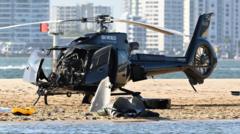
A tragic helicopter collision occurred in January 2023 near Sea World on the Gold Coast, resulting in the deaths of four individuals, including two British tourists. Six others were seriously injured in the accident that shocked one of Australia's major tourist spots. The Australian Transport and Safety Bureau (ATSB) conducted an investigation and found that a faulty radio antenna contributed significantly to the crash. A crucial radio call from one helicopter was not received by the pilot of the outbound aircraft, who was preparing for takeoff. The ATSB's report outlined how Sea World had altered its operations by introducing a new helipad and larger aircraft, which compromised existing safety protocols designed to manage traffic separation. The collision occurred just 20 seconds after one helicopter took off, as the other was landing, resulting in a catastrophe that left families shattered.Among the victims were Diane Hughes, 57, and her husband Ron, 65, who were visiting family in Australia after being separated during the COVID pandemic. Also among the deceased was pilot Ashley Jenkinson, a 40-year-old from Birmingham, and 36-year-old Vanessa Tadros from Sydney. Passengers in the helicopter that successfully executed an emergency landing praised their pilot as a "hero."The ATSB's report, highlighting 28 critical safety findings, underscores a vital lesson regarding operational changes in aviation—what appears to enhance safety may inadvertently introduce new risks. ATSB Chief Commissioner Angus Mitchell emphasized the need for a structured approach to implement any operational changes in aviation to prioritize overall safety.