In brief
The legal decision highlights ongoing debates over animal rights and the treatment of nonhuman animals in captivity.
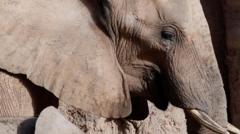
In a significant ruling, the Colorado Supreme Court has determined that elephants do not have the legal status of a person, resulting in the dismissal of a petition seeking the liberation of five elephants from the Cheyenne Mountain Zoo. The case was brought forth by the Nonhuman Rights Project (NRP), which aimed to relocate Missy, Kimba, Lucky, LouLou, and Jambo to a sanctuary, arguing that these animals were experiencing what they termed imprisonment.The NRP's argument was based on a habeas corpus claim, a legal avenue traditionally used to contest unlawful detention. However, the Supreme Court's unanimous decision, articulated by Justice Maria Berkenkotter, firmly stated that the current legal framework in Colorado applies solely to persons and does not extend to nonhuman animals, regardless of their cognitive or emotional complexity.Justice Berkenkotter acknowledged the grandeur of elephants but reinforced that the courts cannot recognize them as persons. The court's decision echoed a previous district ruling, which had similarly upheld the notion that, under state law, animals are not entitled to the same liberties as humans.The NRP contended that the elephants displayed signs of trauma and chronic stress, asserting their right to freedom due to their emotional and social intelligence. In contrast, the Cheyenne Mountain Zoo has defended its care for the elephants, labeling the NRP's lawsuit as “frivolous” and a misuse of legal resources—accusations which the NRP has fiercely rejected.This ruling follows a similar outcome for a separate case involving Happy, an elephant at the Bronx Zoo, who was also deemed not legally recognized as a person. The NRP responded to the recent decision by emphasizing the ongoing struggle for animal rights, likening their situation to historical social justice movements that faced initial setbacks in the face of established norms.