In brief
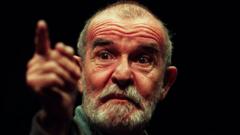
Athol Fugard, an iconic South African playwright, has passed away at the age of 92, leaving behind a legacy of powerful works that challenged apartheid and inspired generations.
Athol Fugard, the revered South African playwright, has died at the age of 92, remembered as one of the nation's most influential artistic voices. Known for confronting the racial injustices of apartheid through his compelling narratives, Fugard’s work has left a lasting imprint on both South African culture and global theatre. Gayton McKenzie, South Africa’s Arts and Culture Minister, honored Fugard's legacy, referring to him as "a fearless storyteller who laid bare the harsh realities of apartheid through his plays." He articulated the dual blessings of apartheid: "We were cursed with apartheid, but blessed with great artists who shone a light on its impact and helped to guide us out of it."Fugard's prolific career spanned 70 years, during which he authored over 30 plays. His breakout piece, The Blood Knot, debuted in 1961, making history as the first production in South Africa with an integrated cast and audience prior to laws banning such compositions. The play propelled Fugard onto the international stage, leading to performances in the US and a television adaptation in the UK.Despite the apartheid regime's confiscation of his passport, Fugard’s determination to confront racial barriers only intensified. He collaborated with the Serpent Players, a troupe of Black actors, and performed in marginalized communities, even in the face of systemic oppression from the regime’s security forces.Celebrated works such as Boesman and Lena, which scrutinized the struggles of a mixed-race couple, further showcased his genius, with a film adaptation released in 2000 featuring well-known actors Danny Glover and Angela Bassett. Fugard’s novel Tsotsi was also adapted into an Oscar-winning film in 2006.The premier of South Africa's Western Cape province, Alan Winde, lauded Fugard's sharp wit and deep understanding of the nation's socio-political landscape. "He will be sorely missed," Winde stated, reflecting the profound loss felt by the artistic community. Fugard’s other notable works include Sizwe Banzi Is Dead and The Island, co-written with John Kani and Winston Ntshona, which powerfully critiqued the harsh conditions faced by anti-apartheid activists on Robben Island, where Nelson Mandela was imprisoned. Kani expressed his sorrow on X, stating, "I am deeply saddened by the passing of my dear friend Athol Fugard."Throughout his life, Fugard earned numerous accolades, including a lifetime achievement honor at the Tony Awards in 2011, and Time magazine recognized him as the greatest active playwright in the English-speaking world in 1985. Reflecting on his career, Fugard once remarked, "Apartheid defined me, that is true... But I am proud of the work that came out of it, that carries my name." Despite fears that the end of apartheid might diminish his writing inspiration, Fugard found ample material in South Africa's evolving landscape.In a 2010 interview, he echoed the sentiments of Archbishop Desmond Tutu, noting the necessity for writers to remain vigilant, signaling that the role of the artist in society continues to be essential for progress. As the world remembers Athol Fugard, his impact on theatre and society serves as a powerful reminder of the arts' capacity to challenge injustices and inspire change.