In brief
Saada Arbane claims that the protagonist of Kamel Daoud's novel "Houris" is based on her traumatic experiences from Algeria's civil war. Arbane filed lawsuits alleging medical confidentiality breaches, prompting debates about authorship and historical narratives.
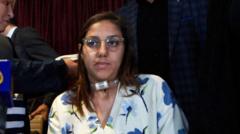
In a significant literary controversy, Algerian author Kamel Daoud is facing legal action over allegations that he appropriated the life story of a woman who survived a brutal Islamist militant attack for his acclaimed novel "Houris." Recipient of France’s prestigious Goncourt prize this year, Daoud's work is a harrowing portrayal of Algeria's violent civil war in the 1990s, where approximately 200,000 individuals lost their lives. The situation escalated when Saada Arbane, the alleged inspiration behind the book's heroine Fajr, publicly asserted on Algerian television that her harrowing past mirrors that of the fictional character. Arbane, who endured a throat-cutting assault during her childhood that claimed the lives of most family members, lives with the aid of a speaking tube. "It's my life. It's my past. He had no right to chuck me out like that," she expressed, recounting her strong opposition to Daoud's request for her story years prior. Arbane claims she shared significant aspects of her life, including her physical scars, tattoos, and even personal relationships, during multiple psychotherapy sessions with Daoud's future wife, Aicha Dahdouh. Insisting on her right to ownership over her narrative, Arbane lodged two lawsuits in Algeria against both Daoud and Dahdouh. The legal action references medical confidentiality laws and a 2005 "reconciliation" law that prohibits profiting from the traumatic experiences of the civil war.Daoud, who relocated to Paris in 2020 and adopted French nationality, has yet to issue a public statement regarding the lawsuit. His novel was subsequently banned in Algeria, highlighting the fraught relationship between literature and the country's historical narrative. His publisher, Antoine Gallimard, condemned the lawsuits as a defamation campaign orchestrated by figures within the Algerian government, while asserting that the novel's characters and plot are entirely fictional. The emergence of the lawsuits follows broader tensions between Algeria and France, sparked recently by President Emmanuel Macron's controversial acknowledgement of Moroccan claims to Western Sahara. This broader political context complicates the reception of Daoud's literary work, with critics suggesting that his award may represent political maneuvering rather than literary merit. As this controversy unfolds, the literary world watches closely, while another notable Algerian writer, Boualem Sansal, has been reported missing after returning to Algeria amid rising concerns for his safety and criticism of the ruling regime.