In brief
Dr. Wissam Sukkar shares her painful reality of providing care under dire conditions, symbolizing the struggles of healthcare professionals in the region.
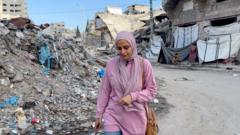
In the heart of Gaza City, the daily grind for healthcare workers is characterized by overwhelming challenges as war ravages resources and infrastructure. Dr. Wissam Sukkar, a local physician, encapsulates the struggle as she reports to work at a Médecins Sans Frontières (MSF) clinic, where she navigates through the remnants of her community's struggle.Beginning her shift at 07:30, Dr. Sukkar walks nearly an hour through devastated streets, a reflection of the severe fuel shortages in the territory. “With our limited resources, we're still trying to be present in northern Gaza through these difficult times,” she noted, illustrating the deep commitment of healthcare workers amidst adversity.The World Health Organization reported that only a fraction of hospitals in Gaza remain operational, severely limiting patient care options. The ongoing Israeli blockade has exacerbated the situation, leading to critical shortages in medical supplies. Dr. Sukkar points to the destroyed MSF burns clinic and explains the urgent need for healthcare amidst the persistent violence.By the time she dons her white coat, about 150 patients are already queued outside, many of whom are displaced individuals seeking help in makeshift shelters. “Most of our patients are displaced people,” Sukkar remarks, highlighting the dire living conditions, and lamenting the rise in malnutrition and infectious diseases, particularly affecting vulnerable populations like infants and the elderly.Inside, the clinic is busier than ever. As cases of upper respiratory infections and gastrointestinal issues surge, dramatic shifts have been noted in the types of illnesses presented. Families, using open fires for cooking due to gas shortages, are increasingly arriving with serious burn injuries.With countless patients arriving daily, Dr. Sukkar struggles with the persisting challenge of insufficient medical supplies. “We have more complicated cases, and we don’t know where to refer these patients because the health system has collapsed,” she admits wearily. The situation intensified following a recent airstrike that rendered Gaza’s Al-Ahli Arab hospital incapacitated, which had previously been a key facility for trauma care. As a result, patients like Saeed Barkat, who arrived with serious injuries, find it increasingly difficult to receive adequate treatment. As midday approaches, Dr. Sukkar's anxiety grows when examining the clinic's pharmacy, revealing dwindling supplies for critical treatments. The closure of crossing points into Gaza has halted aid, leaving healthcare professionals and patients in an increasingly precarious position. “We don’t have insulin for diabetes or treatments for common ailments,” Dr. Sukkar says, highlighting the dire state of medical provision.Despite the mounting challenges, Dr. Sukkar continues her work, fulfilling a staggering workload of 390 patients in one day, while her thoughts linger on her family's safety and provisions. “We don't have electricity, which complicates everything,” she explains, voicing a sentiment universally shared among Gazans.As the day winds down at 15:30, Dr. Sukkar reflects on her exhausting routine and the persistent feeling of hopelessness. "It's really hard to have any hope," she confesses, “I feel I live in a nightmare that doesn't end." The uncertainty looms large, resonating deep within the souls of those striving to survive amid continuing violence and despair.