In brief
In a dramatic outcome of the recent German federal elections, Friedrich Merz's conservatives emerged victorious but with a disappointing vote share. Their strong competition came from the far-right Alternative for Germany (AfD), which celebrated a historic second-place result, indicating a significant shift in the political landscape.
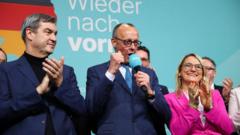
Friedrich Merz’s Christian Democrats (CDU) garnered 28.6% of the vote, well below their anticipated 30%. Addressing enthusiastic supporters, he acknowledged the responsibility that rests on his shoulders moving forward. Meanwhile, the AfD, led by Alice Weidel, achieved an impressive 20.8%, though expectations for an even better outcome dimmed the celebratory mood at their headquarters. Notably, they dominated the eastern regions of Germany, with polling showing a staggering 34% support.Merz has openly ruled out any coalition with the AfD, respecting the long-standing "firewall" preventing mainstream parties from aligning with far-right factions. His most viable options for coalition partners—namely the Social Democrats and the Greens—both faced setbacks, with the Social Democrats recording their worst-ever performance at 16.4%. Outgoing Chancellor Olaf Scholz mourned the results, asserting he would not engage in coalition talks.The political scenario remains challenging for Merz, especially as he works to form a governing coalition after four years characterized by a tripartite alliance. His recent remarks on strengthening Europe highlight a shift in focus, as he aims to reduce reliance on the U.S. amid rising skepticism regarding American foreign policy. Additionally, the rise of alternative parties like the Left, which gained traction through viral social media campaigns, underscores the growing disillusionment with traditional politics among younger voters. The Left party surged in polls, emphasizing a shift in allegiance that could suggest further fragmentation in future elections.As reactions to the results unfold across Europe, leaders such as Macron and Starmer are looking to collaborate on pressing global challenges. The electoral landscape in Germany indicates an evolving political dynamic, with older voters favoring Merz's CDU, while a younger demographic increasingly gravitates toward the AfD and other emerging parties, marking a potential turning point in the nation’s political discourse.