In brief
A UN report reveals serious human rights abuses during last year's protests in Bangladesh, suggesting the former government employed deadly violence as a tactic to maintain power.
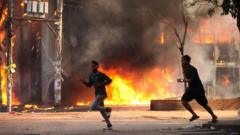
In a damning report, UN human rights investigators have condemned the former government of Bangladesh, led by ex-Prime Minister Sheikh Hasina, for its violent crackdown on protesters, which they assert may constitute "crimes against humanity." The findings highlight a systematic campaign of repression against demonstrators throughout 2022, during which they estimated that up to 1,400 people lost their lives, many at the hands of security forces. The uprising initially ignited as student protests demanding fair job quotas but rapidly morphed into widespread calls for the removal of Hasina and her Awami League Party. As tensions escalated due to a violent police response, crowds turned violent, leading to unprecedented unrest in the country, the worst seen since its independence war in 1971. In the wake of the protests, Hasina reportedly fled by helicopter to India, avoiding direct confrontation with the masses.Volker Türk, the UN human rights chief, revealed during a press conference in Geneva that the evidence points to a concerted strategy directed by political leaders and senior officials to quash dissent through severe and violent means. The investigation, which included gathering testimonies from over 230 survivors and witnesses, chronicled incidents of extrajudicial killings, torture, and arbitrary arrests, alongside alarming reports of children being specifically targeted.The report indicates that the violence was not only widespread but also entrenched within the state's operations, resulting in a strategy designed to maintain political power against a backdrop of heavy dissent. The investigation also calls attention to the broader implications of the actions taken against various groups who opposed the former regime, stressing that these incidents also warrant thorough investigation.The overall death toll cited by the UN is significantly higher than the 834 reported by the current interim government under Muhammad Yunus. The new leadership has committed to reshaping Bangladesh into a society characterized by security and dignity for all, in light of the shocking revelations outlined in the UN’s findings.