In brief
Amidst discontent with modern social norms, a growing number of young men in the United States are converting to the Russian Orthodox Church, attracted by its advocacy for traditional masculine values and family-oriented principles.
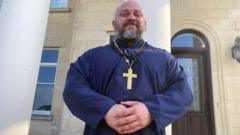
Father Moses McPherson’s congregation in Georgetown, Texas, has grown exponentially, attracting a wave of young men entangled in the quest for what he describes as "absurd levels of manliness." The priest has leveraged online platforms to spread his message, disdaining behaviors he believes undermine masculinity—like using an iron, eating soup, or displaying emotional openness. Once a Protestant and blue-collar worker, Father Moses now represents a segment of the Russian Orthodox Church Outside Russia (ROCOR), which is witnessing a surge in conversions. Over the past 18 months, his church has tripled in size, and he has personally baptized 75 new followers. Attendees at his Sunday services include many men in their twenties and thirties who are seeking community and fulfillment amid modern American life.Among these converts is Theodore, a software engineer who felt a void despite having a stable job and supportive partner. He attributes his disillusionment to societal pressures that denigrate traditional male roles and assert that men are in the wrong for wanting to be providers. His story, echoed by others like him who prioritize home-schooling and reject contemporary gender discussions, paints a picture of a movement that aligns closely with conservative values.In a broader landscape where evangelical megachurches dominate, Orthodoxy only accounts for about one percent of the U.S. population. Yet, the shift in the demographic of this small community hints at significant cultural undercurrents. Recent studies suggest Orthodox Christians have become increasingly male-dominated, with public queries about faith rising during the pandemic.This wave of new converts often engages online, with Father Moses accruing substantial followings on social media. Many convert to Orthodox Christianity seeking an antidote to what they view as an overly feminized Western culture. Former Protestant Elissa Bjeletich Davis notes that some newcomers join the Russian Church with unpleasant perceptions of its orthodox discipline, seeing it as an avenue towards a more authoritative lifestyle, straying from modern sensibilities.Former firefighter, Buck Johnson, found his way to the church during the pandemic and emphasizes the welcoming environment despite his tattoos and unconventional appearance. He contends that mainstream media attitudes towards Russia are misguided, aligning his views with those of Russia's Patriarch Kirill, who has embraced controversial political stances.Pushback against liberal ideologies has catalyzed interest in Russia as a supposed bastion of traditional values, encouraging some clergy and followers to relocate there for a lifestyle more aligned with their beliefs. Ultimately, many converts articulate a renewed commitment to family-centric ideologies, desiring to cultivate a long-term vision rooted in Orthodoxy’s traditions.