In brief
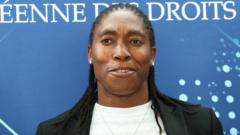
The European Court of Human Rights (ECHR) has determined that Caster Semenya's right to a fair hearing was compromised by the Swiss Federal Supreme Court in a ruling regarding her eligibility to compete in athletics, effectively sidelining her from the sport. The double Olympic champion's fight against the regulations imposed by World Athletics, which limit testosterone levels for female athletes, has garnered significant attention globally. Semenya, who has Differences of Sexual Development (DSD), expressed her commitment to advocating for athletes' rights, stating that the verdict is more than a sporting issue—it's a matter of human rights. The ruling allows Semenya to continue her legal battle; however, World Athletics' eligibility rules remain in place for now.
Semenya's long-running conflict with World Athletics stemmed from a 2019 regulation that specifically targeted athletes with DSD, leading to her withdrawal from the 800m events. The ECHR's ruling found that the Swiss government's earlier decisions failed to provide a sufficiently rigorous assessment of her case under Article 6 of the European Convention on Human Rights, which guarantees the right to a fair hearing. Although the ECHR's Grand Chamber found some of Semenya’s complaints inadmissible regarding privacy and discrimination, the acknowledgment of her right to a fair hearing is seen as a pivotal move in her ongoing fight.“It’s overwhelming,” Semenya said of the verdict, emphasizing its importance not just for her, but for many marginalized athletes. Her legal representative, Schona Jolly, noted that this ruling should prompt a reassessment of how international sport considers athlete rights. While the legal implications continue to unfold, there's a broader context of scrutiny on gender eligibility in sports, with potential new regulations looming on the horizon, including DNA testing to determine sex in competitive athletics.Despite the ruling providing some validation for Semenya, it does not directly overturn any of the existing World Athletics guidelines. The resolution's potential long-term effects on her career remain uncertain, as she now pivots towards coaching. The case highlights the complex intersections of gender, biology, and fairness in sports, mirroring broader societal debates about inclusivity and equality.