In brief
A catastrophic incident involving two Russian oil tankers in the Black Sea has resulted in a major oil spill and crew distress, prompting an investigation into potential criminal negligence as rescue efforts continue under challenging weather conditions.
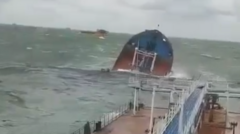
Two Russian oil tankers have incurred severe damage in the Black Sea, resulting in a significant oil spill, according to Russian authorities. Recent footage from the Southern Transport Prosecutor's Office shows one of the tankers split in half, with visible streaks of oil spreading in the water. Reports indicate that both tankers had been adrift before running aground offshore in the Kerch Strait, the waterway dividing Russia from Crimea, which was annexed by Moscow in 2014. Tragically, at least one crew member is confirmed dead following the incident.A complex rescue effort was launched, which included tugboats, helicopters, and a contingent of over 50 personnel. Thirteen crew members were successfully evacuated from one tanker before operations were suspended due to worsening weather conditions. Meanwhile, the remaining 14 crew members aboard the second tanker are reportedly equipped with all essentials for survival but may remain stranded until conditions improve.In response to the mishap, President Vladimir Putin has directed the formation of a working group led by Deputy Prime Minister Vitaly Savelyev, as authorities pursue an investigation into the potential criminal negligence behind the incident.Michelle Bockmann, an analyst for Lloyd's List, noted that the two damaged vessels are owned by Volgatanker and were relatively small, each carrying approximately 4,300 dead weight tonnes of oil. This is considerably less than the average capacity of international trading tankers, typically around 120,000 dead weight tonnes, suggesting that these vessels were likely used for domestic transports through Russia's rivers or nearby coastal areas.The Kerch Strait plays a vital role in the export routes for Russian grain and is also crucial for oil, fuel, and liquefied natural gas shipments. This incident recalls a similar event from 2007 when another tanker, Volgoneft-139, split during a storm nearby, resulting in over 1,000 tonnes of oil being spilled into the sea.Following the Kremlin’s full-scale invasion of Ukraine in February 2022, Russian oil imports have faced heavy sanctions from multiple countries. Although allegations exist regarding Russia's use of a "ghost fleet" of inadequately maintained tankers to evade sanctions, analysts assert that the tankers involved in this recent disaster do not appear to belong to that fleet.