In brief
As the world awaits the upcoming conclave to elect a new pope, the centuries-old communication method of smoke rising from the Sistine Chapel chimney continues to exemplify the blend of ritual and precision.
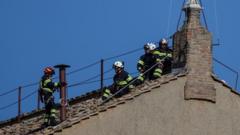
When the time arrives for the Catholic Church to elect its new leader, the anticipation grows as watchful eyes are fixed on the small chimney atop the Sistine Chapel. A plume of black smoke indicates that a new pope has not yet been chosen, while white smoke signifies that a decision has been reached – a dramatic moment declared as "Habemus Papam" or "We have a pope." While millions tune in for this live spectacle, the intricate planning and engineering that underpin this centuries-old ritual often remain hidden from view. Experts consulted by the BBC reveal that crafting the smoke signals requires significant preparation, including custom fireworks, smoke test rehearsals, and even firefighters on standby for safety. As the Church prepares for the conclave following the passing of Pope Francis, scheduled to start with a Mass at St. Peter's Basilica on May 7, the electoral tradition remains a complex convergence of sacred duty and engineering prowess.Historically, burning the ballots of the electing cardinals, a practice that began in the 15th Century, has ensured voting transparency while preventing tampering. The resulting smoke communicates the electoral outcome, maintaining a veil of confidentiality for the cardinals’ deliberations. Despite the evolution of technology over the years, the Vatican has chosen to uphold this tradition, which has deep roots in cultural and spiritual symbolism."The visual of rising smoke has long been regarded as a conduit of communication with the divine," remarked Candida Moss, a theology professor at the University of Birmingham. This shared experience mirrors biblical rituals involving smoke as prayer, which fosters a sense of connection among the gathered faithful in St. Peter's Square.Preparations for the smoke signals are elaborate and detailed. Two specially constructed stoves sit temporarily within the Sistine Chapel: one for incinerating the ballots and the other to produce the smoke signal itself. A small flue connects both stoves to the chapel's roof, where technicians ensure that the setup allows for clear smoke delivery while respecting the chapel’s architectural integrity.Creating the smoke requires the use of specific chemical compounds akin to custom fireworks. Different combinations yield either black smoke or the bright white smoke eagerly awaited by the crowd. Black smoke is produced from a mix of potassium perchlorate, anthracene, and sulfur, while white smoke arises from burning potassium chlorate, lactose, and pine rosin. The traditional methods of using straw have been discontinued due to the potential for confusion with grey smoke.Additionally, bells now toll alongside the smoke signals as confirmation of a newly elected pope. Although ideas for modernization, such as colored lights or digital alerts, have surfaced over the years, the Vatican remains committed to preserving the traditional ritual that holds deep spiritual significance."This ceremony transcends mere communication; it maintains continuity with a longstanding historical and theological legacy," explains Moss. Indeed, for the Vatican, the essence of the process lies in its tradition, sparking an air of reverence amidst the modern world.