In brief
Zamrock, flourishing in the 1970s, is experiencing a renaissance driven by modern artists like Sampa the Great. This Zambian genre, rich in post-colonial expression, mixes traditional sounds with rock, now being rediscovered by global musicians and listeners alike. Renowned figures such as Tyler, the Creator have sampled Zamrock tracks, reinforcing its relevance and inspiring new generations to innovate within this unique musical framework.
Artists and music fans from around the world have been rediscovering the 1970s sound of Zambia known as Zamrock in recent years, and now one of the country's biggest stars is embracing it, hoping to give it a fresh twist.
When devising her third studio album, Sampa the Great looked to the niche, brief musical movement that ignited her birth country more than 50 years ago.
We were looking for a sound and a voice that was so post-colonial. And Zamrock was that sound - that sound of new freedom, that sound of boldness, the Zambian-born, Botswanan-raised rapper — who has performed at the likes of Glastonbury, Coachella, and the Sydney Opera House — told the BBC.
Zamrock - with its heady blend of psychedelic rock and traditional Zambian sounds - rears its head on Can't Hold Us, the first single to be released from Sampa's upcoming album.
Fuzz guitars thrust the song forward, as Sampa, full name Sampa Tembo, defiantly raps: They don't have the guts to match my prowess. And she’s not the only contemporary artist who has been digging through Zamrock's dusty crates.
In the past few years, US hitmakers Travis Scott, Yves Tumour, and Tyler, the Creator have sampled tracks from Ngozi Family, Amanaz, and WITCH — all popular bands in Zamrock's 1970s heyday.
Zamrock can also be heard on our screens — HBO superhero series Watchmen and Emmy-winner Ted Lasso have incorporated songs from the genre in their soundtracks.
It is an unexpected resurgence, especially given that in its heyday, Zamrock never really left the African continent.
The movement emerged in the 1970s, in a Zambia recently broken free from its British colonizers. The nation was basking in an economic boom and President Kenneth Kaunda had enforced a Zambia first policy which, among many other things, meant 95% of the music played by radio stations had to be of Zambian origin.
The groundwork was laid for young creatives to forge a bold, distinctly Zambian musical identity. We were influenced by rock bands like Deep Purple, Grand Funk Railroad, Led Zeppelin, Jimi Hendrix, James Brown, says WITCH frontman Emmanuel Chanda, better known as Jagari, after Mick Jagger.
In the 1970s, Zambia's recording studios were rudimentary and there was no established recording industry. Regardless, Zamrock thrived.
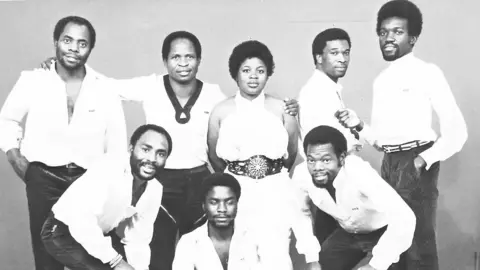
Musicians illuminated stages with bell-bottom jeans, platform shoes, and colorful headbands. WITCH, an acronym for We Intend To Cause Havoc, lived up to their name, with fans clamoring outside sold-out venues, hoping to watch marathon shows that sometimes lasted from 19:00 to 02:00.
But for all of its impact, Zamrock could not last. The genre crumbled after roughly a decade, when Zambia was hit with a series of crises. The price of copper, Zambia's main export, plummeted, leading to an economic decline that diminished the ability to tour, record and buy music.
Musical piracy also hit Zamrockers, as bootleggers made money by copying and selling their music. And from the 1980s, the country was badly hit by the HIV/Aids crisis, which led to the deaths of many musicians. Five of WITCH's founding members died from Aids.
Zamrock lay dormant for decades. Its surviving founders returned to civilian life — Jagari went to work in the mines to support his family.
But in the early 2010s, seemingly out of nowhere, record collectors in the West caught on to the genre. US-based label Now-Again Records played a significant part in Zamrock's revival, sourcing and reissuing albums from some of the genre's biggest names.
In 2011, Now-Again Records released a compilation of WITCH's music. The ensuing buzz led to a reincarnation of the band, featuring Jageri and Patrick Mwondela from WITCH's old days, and a number of younger European musicians. WITCH have since released two albums, starred in a documentary, played at the iconic Glastonbury Festival, and toured outside Africa — something the original band never managed to achieve.
Jagari, now 74 years old, reflects on this surprising second chance, expressing joy at seeing the younger generation carry the Zamrock torch: The fire has been lit. It’s up to the younger generation to put more firewood to it and let the flames burn.