Ukraine is preparing to present a revised peace plan to the White House, as it seeks to avoid making territorial concessions to Russia.
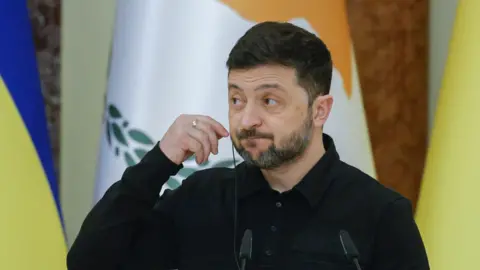
Kyiv is set to propose alternatives to the U.S. after President Volodymyr Zelensky again ruled out surrendering land, stating he had no right to do so under Ukrainian or international law.
Zelensky made these comments while meeting with European and NATO leaders on Monday, as part of a collective push to deter the U.S. from backing a peace deal that includes major concessions which allies fear could leave Ukraine vulnerable to future invasions.
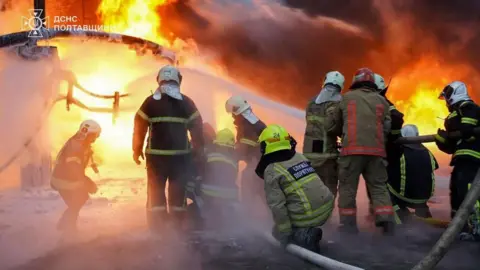
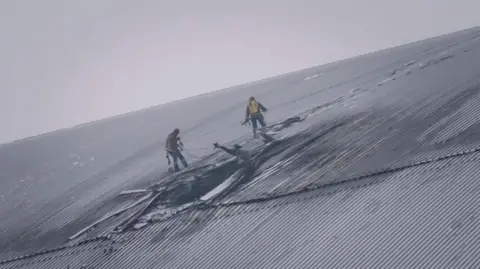
Meanwhile, the city of Sumy in north-western Ukraine faced a blackout following a Russian drone attack, which the region's governor reported had hit power infrastructure. Fortunately, no casualties were reported.
Zelensky's ongoing diplomatic tour through Europe follows intensive negotiations between U.S. and Ukrainian negotiators over the weekend, which did not yield an agreement acceptable to Kyiv.
The Ukrainian president indicated that his team might send a new proposal to the Americans as soon as Tuesday, according to reports from AFP news agency.
Stressing Ukraine's position on territorial integrity, Zelensky stated: Russia is insisting that we give up territories, but we don't want to cede anything. We have no legal right to do so under Ukrainian law, our constitution, and international law. We don't have any moral right either. He maintained that any changes to Ukraine’s borders would require authorization from a public referendum.
Reports indicate that the initial 28-point plan proposed by the U.S. has been reduced to 20 points. However, Zelensky confirmed that no pro-Ukrainian points were removed from the draft, and no compromises were made concerning territorial issues. He highlighted the control of the eastern Donbas region and the Zaporizhzhia nuclear power plant as critical points of contention.
The original draft suggested that Ukraine relinquish total control of the Donbas to Russia, despite ongoing conflict in the region. It also proposed splitting energy produced at Zaporizhzhia, the largest nuclear power plant in Europe, between Russia and Ukraine.
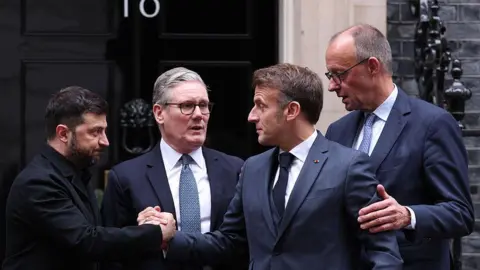
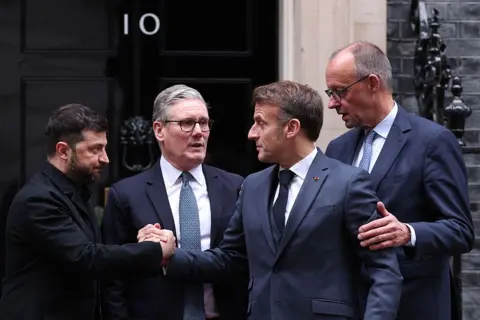
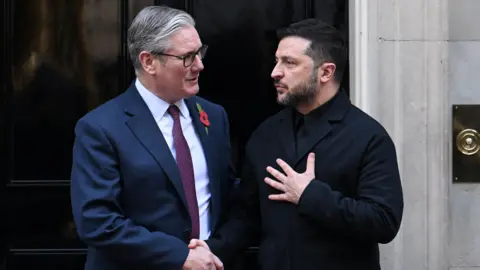
Leaders in Kyiv and Europe noted improvements in refining the draft in recent weeks, with the Downing Street summit attended by Zelensky, UK Prime Minister Sir Keir Starmer, French President Emmanuel Macron, and German Chancellor Friedrich Merz representing a show of support for Ukraine amid U.S. negotiations.
No. 10 issued a statement declaring that the U.S.-led talks signal a critical moment for intensifying support for Ukraine while advocating for a just and lasting peace... which includes robust security guarantees.
Future security guarantees form a central question in ongoing negotiations, with discussions regarding assembling an international coalition to offer military support to Kyiv in the event of a peace agreement. Notably, proposals for deploying international troops in Ukraine have faced skepticism from key European defense players such as Germany and Italy.
Following talks in London, Zelensky is scheduled to meet with NATO chief Mark Rutte and EU chief Ursula von der Leyen in Brussels, and Prime Minister Georgia Meloni in Italy on Tuesday.
Meanwhile, Moscow has claimed its conversations with the U.S. have been constructive, despite no clear indications of a shift in the Kremlin’s stance regarding its invasion goals.
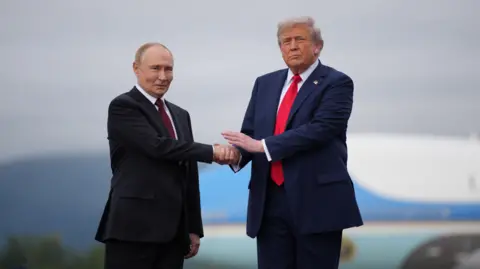
During a recent statement, former U.S. President Donald Trump characterized Zelensky as the main obstacle to achieving a peace deal, asserting that he could quickly negotiate one during the 2024 election campaign, suggesting that Russia would be comfortable with the U.S.-proposed peace framework.