In brief
Zahra Tabari, a 67-year-old women's rights activist in Iran, faces execution after a trial that reportedly lasted less than ten minutes. Following her conviction for 'armed rebellion,' UN experts and a group of over 400 women, including several notable figures, have publicly condemned the decision and urged for her release. The case highlights concerns over Iran's treatment of activists and the broader implications for human rights in the country.
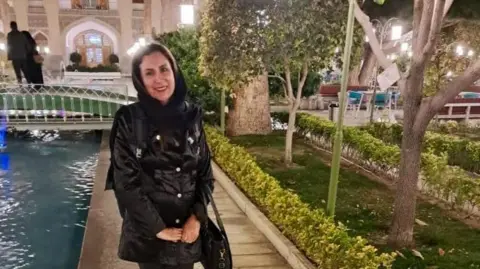
UN experts and 400 prominent women have urged Iran not to execute Zahra Tabari, a 67-year-old electrical engineer and women's rights activist.
Ms Tabari was arrested in April and accused of collaborating with a banned opposition group, the People's Mujahideen Organisation of Iran (PMOI), according to her family.
In October, she was convicted of 'armed rebellion' by a Revolutionary Court in Rasht after a trial via video link that lasted less than ten minutes. Her family reported that the verdict was based on extremely limited and unreliable evidence: a piece of cloth inscribed with the words 'Woman, Resistance, Freedom', and an unpublished audio message.
Iranian authorities have not yet commented on the case.
At least 51 other individuals in Iran are also facing the death penalty for national security offenses, including armed rebellion and 'enmity against God', according to UN experts.
The UN Human Rights Council's special rapporteurs expressed that Ms Tabari's situation exemplifies a series of severe violations of international human rights law.
She was arrested during a raid on her home without a judicial warrant, held in solitary confinement for a month, and was pressured to confess to crimes against the state. Furthermore, she was denied access to a lawyer of her choosing and was represented by a court-appointed attorney.
The joint statement from UN experts highlighted that executing Ms Tabari under such circumstances would constitute an arbitrary execution and that criminalizing women’s activism severely discriminates against gender rights.
A public appeal for her immediate release, supported by notable figures such as former national leaders and Nobel laureates, stated, 'Iran is today the world's number one executioner of women per capita.'
The appeal was organized by the UK-based group Justice for the Victims of the 1988 Massacre. Another Iranian activist, Pakhshan Azizi, is also facing a similar charge.
Reports indicate that at least 1,426 people were executed in Iran in the first eleven months of 2025, with a significant rise in executions compared to the previous year, mostly for drug-related offenses and national security offenses.
}