In brief
The US and Israel have turned down a proposal from Arab leaders for Gaza's reconstruction, asserting it does not align with current realities in the region.
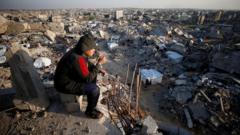
The United States and Israel have both outright rejected a comprehensive Arab proposal aimed at the post-war reconstruction of Gaza, which should allow its 2.1 million Palestinian inhabitants to remain in place. This plan was formally endorsed by Arab leaders during an emergency summit in Cairo. It presents an alternative to President Donald Trump's controversial vision for Gaza, which involves a US takeover and the eventual resettlement of the Palestinian population.The Arab plan, welcomed by both the Palestinian Authority and Hamas, suggests a temporary governance structure for Gaza involving independent experts and the deployment of international peacekeeping forces. However, representatives from the White House and Israel's foreign ministry expressed their stance that the proposal does not adequately reflect the realities on the ground in Gaza, upholding Trump's vision for the region.The summit was convened amid rising fears regarding the stability of the ceasefire in Gaza, as the initial six-week phase expired recently. Israel has been hindering the delivery of humanitarian aid as a means to pressurize Hamas into accepting a new US initiative aimed at extending the ceasefire temporarily. Hamas has firmly insisted that the agreed-upon second phase should commence as outlined, which includes ending the conflict and expediting the full withdrawal of Israeli troops.An ambitious $53 billion Arab plan was unveiled by Egypt during the summit, addressing the anticipated reconstruction efforts. The proposal highlights a strong denunciation of any displacement of the Palestinian population, deeming it a gross violation of international law and an act of ethnic cleansing. The reconstruction process is proposed to unfold in three phases over the next five years, encompassing the relocation of approximately 1.5 million displaced persons into prefabricated housing and repaired homes.During the first six months, estimated to cost $3 billion, efforts would focus on clearing rubble and any unexploded devices. Following that, a two-year, $20 billion stage would see the reconstruction of housing and essential utilities, concluding with the establishment of an airport, two seaports, and an industrial zone in the last phase.Further complicating matters, the Israeli government has rejected the Arab League’s endorsement of the Egyptian reconstruction plan. They argue that it fails to incorporate the changes in circumstances following the conflict that escalated on October 7, 2023. In contrast, White House representatives stated that the Arab proposal fails to acknowledge the current uninhabitable state of Gaza, which is overwhelmed by debris and hazardous remnants of war. Trump's plan aims to rebuild Gaza free from Hamas influence, with the expectation of initiating discussions to foster peace and enduring prosperity in the region.The Assistant Secretary General of the Arab League condemned Trump’s approach as unacceptable, calling it a method based on the forced upheaval of Palestinians from their homes, a violation of international law. He criticized the Israeli response to the Arab plan as morally reprehensible, echoing the concerns shared by many Palestinians fearing the recurrence of displacement reminiscent of the Nakba of 1948.The conflict, ignited by an unprecedented cross-border attack on October 7, has resulted in staggering casualties, with Israeli military campaigns targeting Hamas amidst escalating violence. Reports from Gaza indicate that the humanitarian crisis has deteriorated sharply, with health services collapsing and essential resources such as food and medicine running critically low.