In brief
Three former leaders of Hong Kong's Tiananmen Square vigil group were sentenced in a national security court. Lee Cheuk‑yan, 69, and Chow Hang‑tung, 41, received guilty verdicts for encouraging subversion, while Albert Ho, 74, had already pleaded guilty. The prosecutors argued that their activities threatened state security, despite claims that the law itself was on trial. Human rights groups say the charges rely on vague definitions of subversion, raising concerns about free expression.
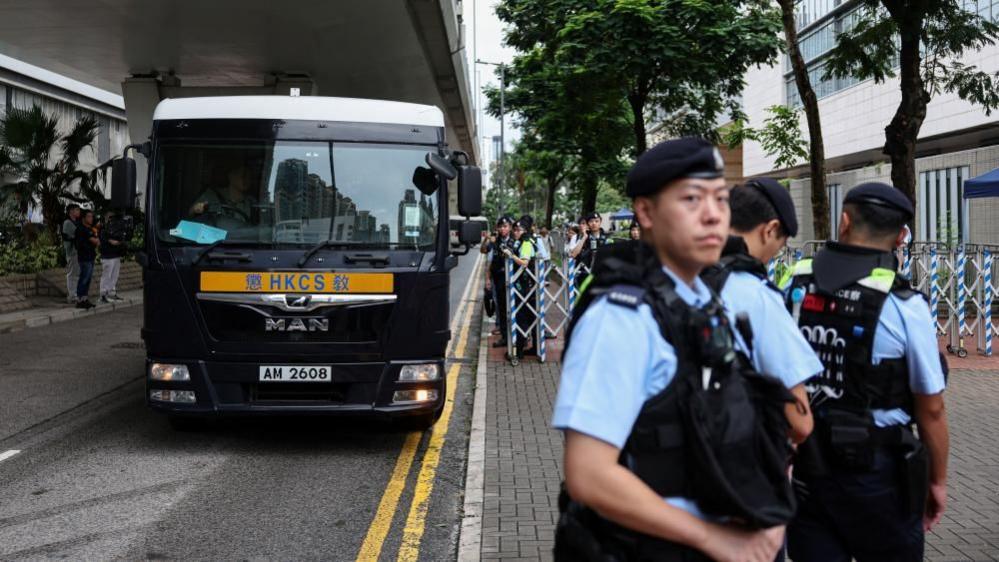
Lee Cheuk‑yan (69) and Chow Hang‑tung (41), former leaders of Hong Kong’s now‑defunct Tiananmen Square vigil group, were found guilty of inciting others to subvert state power under the city's National Security Law. Prosecutors argued that their public advocacy “endanger[ed] national security in the name of human rights.” The court convicted the men in a 31‑minute hearing, with a sentencing hearing scheduled for later in the year.
Loosely, the law criminalises a wide range of dissenting acts, including organising public gatherings for the 1989 crackdown commemorated in Hong Kong’s annual vigils. The activists had organised a vigil each year since 1998, a tradition banned by authorities in 2020 under Covid‑19 restrictions and never resumed thereafter.
In January, 74‑year‑old former lawmaker Albert Ho pleaded guilty to the same charges, having been detained in 2021 after being charged with subversion.
The National Security Law, which entered force in 2020, had previously broadened the definition of subversive acts, allowing the authorities to prosecute political activists. Human rights organisation Amnesty International says the case was built on “vague, overly broad and arbitrary definitions of ‘subversion’,” citing concern that the law threatens freedom of expression and peaceful assembly.
The verdict reflects a chilling trend for dissenting voices in Hong Kong, where the once‑unique space for public discussion of the Tiananmen 1989 crackdown is now heavily monitored and increasingly restricted.