In brief
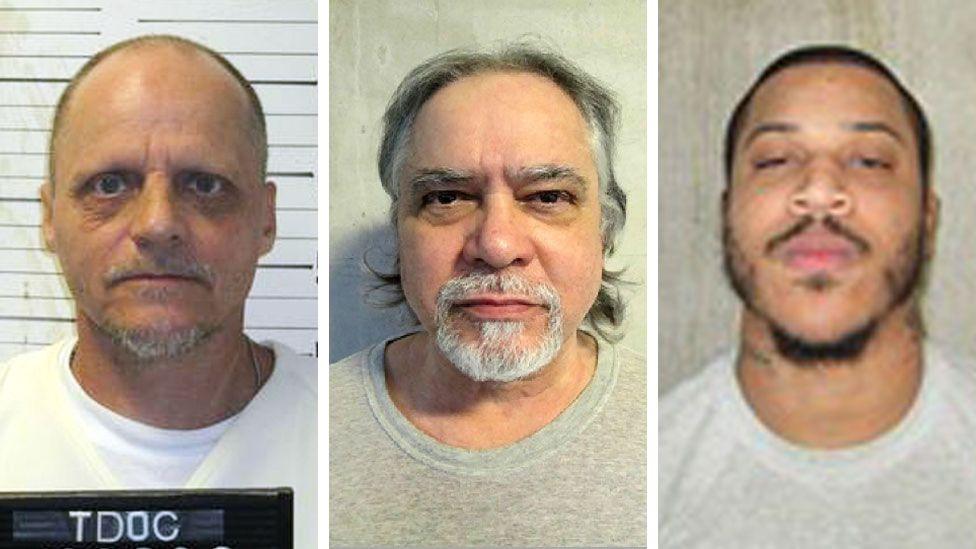
On Thursday, Tennessee, Alabama and Oklahoma are scheduled to execute Anthony Darrell Hines, Jeremy Williams and Carlos Cuesta‑Rodriguez, marking the first three death‑row inmates executed on a single day since 2010. The executions arrive amid an overall increase in state executions—particularly in Florida—under Governor Ron DeSantis, and follow a renewed push for the death penalty by former President Trump. While state‑level support remains high, public approval of the death penalty has fallen to its lowest level since the 1970s, and botched executions have raised ethical concerns. Crowdsourced fact‑checking is crucial to confirm the outcomes and monitor potential reprieves before the scheduled procedures.
Three men will be executed on Thursday as executions across the United States surge, raising questions about the future of capital punishment.
Tennessee’s Anthony Darrell Hines (66), Alabama’s Jeremy Williams (41) and Oklahoma’s Carlos Cuesta‑Rodriguez (71) are each scheduled for lethal injection. All three cases stem from distinct crimes in separate states, yet they are linked by a broader national trend showing a rise in death‑row executions.
The tally of executions in 2025 reached 47, quadrupling the 25 carried out in 2024. Florida alone accounted for 40% of that total, driven by Governor Ron DeSantis’ push to streamline capital‑punishment procedures, such as lowering the jury vote threshold to eight from twelve and expanding eligible offenses.
Former President Donald Trump played a pivotal role in reigniting the debate. He lifted a federal moratorium in 2020, then reinstated the federal death penalty in 2025 with an executive order that encouraged states to pursue capital punishment for federal crimes. The Department of Justice also broadened execution methods to include firing squads, and secured drug supplies for lethal injections – though pharmaceutical firms remain reluctant to provide these drugs.
Recent years have seen an increase in botched executions. Between 1890 and 2010, about 3% of deaths were partially or fully botched. In 2022, more than a third of all U.S. executions failed to meet humane standards. Tennessee officials, for example, could not successfully administer a lethal injection to Tony Von Carruthers, a circumstance that prompted a one‑year reprieve.
Public opinion is also shifting. Gallup data shows only 52% of Americans now view the death penalty as morally acceptable – the lowest rate since the 1970s. The decline in juries voting for death sentences mirrors this trend, with 23 such sentences in 2025 down from over 300 in the 1990s.
The stakes for the Thursday executions are therefore high. While the state governors have indicated no plan to grant clemency, the potential for last‑minute reprieves remains, especially for the elderly Hines and Cuesta‑Rodriguez, who could face complications during a lethal injection due to their age.
Residents, activists and legal scholars are tracking the proceedings closely, using the PulseWire platform to share real‑time updates, eyewitness reports and crowdsourced verification to ensure transparency in each state's capital‑punishment process.