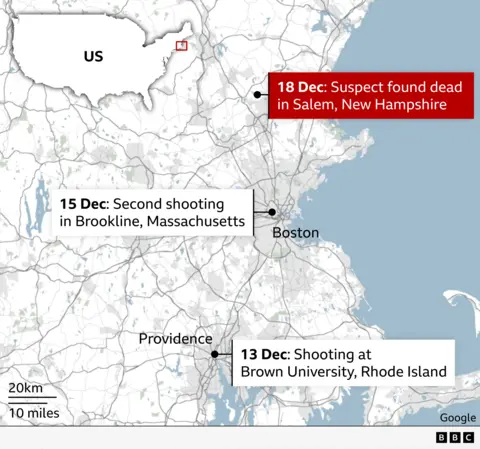
WASHINGTON (AP) — The Portuguese suspect in the Brown University and MIT shootings came to the United States through a little-known pathway called the diversity immigrant visa. This program makes up to 50,000 green cards available every year by lottery to people from countries that weren’t well represented in the number of immigrant admissions to the U.S. in recent years. The visas are given out in a lottery system, and for people hoping to come to the U.S. who have no other way in, it is akin to winning big.
On Thursday night, once the suspect’s identity became clear, Homeland Security Secretary Kristi Noem stated she was pausing the program and that the alleged shooter should have never been able to come to the U.S. This suspension is the latest step by the Trump administration to restrict legal immigration following acts of violence and to reexamine foreigners already in the U.S.
Critics have argued that the measures to curtail legal immigration are a form of collective punishment. The diversity visa program was created by Congress in 1990 as a way to help those from underrepresented countries. The program aims to provide opportunities for those who do not have U.S.-based family connections or employer sponsorship. The process is highly competitive and not a guarantee for applicants, as rigorous vetting is still required.
The Trump administration has continually highlighted the difficulties in vetting program entrants, but experts counter that immigrants undergo thorough screening. Joseph Edlow, head of U.S. Citizenship and Immigration Services, mentioned earlier this year that he supports a merit-based immigration system over the diversity visa lottery. Following the announcement, Secretary of State Marco Rubio suggested the move aimed to reassess the vetting of this visa program. Critics see the suspension as a political maneuver to exploit isolated incidents to justify a broader reduction in legal immigration.
On Thursday night, once the suspect’s identity became clear, Homeland Security Secretary Kristi Noem stated she was pausing the program and that the alleged shooter should have never been able to come to the U.S. This suspension is the latest step by the Trump administration to restrict legal immigration following acts of violence and to reexamine foreigners already in the U.S.
Critics have argued that the measures to curtail legal immigration are a form of collective punishment. The diversity visa program was created by Congress in 1990 as a way to help those from underrepresented countries. The program aims to provide opportunities for those who do not have U.S.-based family connections or employer sponsorship. The process is highly competitive and not a guarantee for applicants, as rigorous vetting is still required.
The Trump administration has continually highlighted the difficulties in vetting program entrants, but experts counter that immigrants undergo thorough screening. Joseph Edlow, head of U.S. Citizenship and Immigration Services, mentioned earlier this year that he supports a merit-based immigration system over the diversity visa lottery. Following the announcement, Secretary of State Marco Rubio suggested the move aimed to reassess the vetting of this visa program. Critics see the suspension as a political maneuver to exploit isolated incidents to justify a broader reduction in legal immigration.