In brief
Scientists say a SpaceX Falcon 9 upper stage launched in January 2025 will collide with the Moon on 5 Aug 2026 at 02:35 EDT. Moving at 2.43 km s⁻¹, the hefty ~4,000 kg booster is expected to create a more than 17‑m crater near Einstein Crater and explode a dust plume up to 50 km. While harmless to Earth, the event will give astronomers a rare chance to study lunar impacts and raises alarm over growing space debris. NASA and international observatories will track the flash and plume while citizen‑scientists will film from Earth.
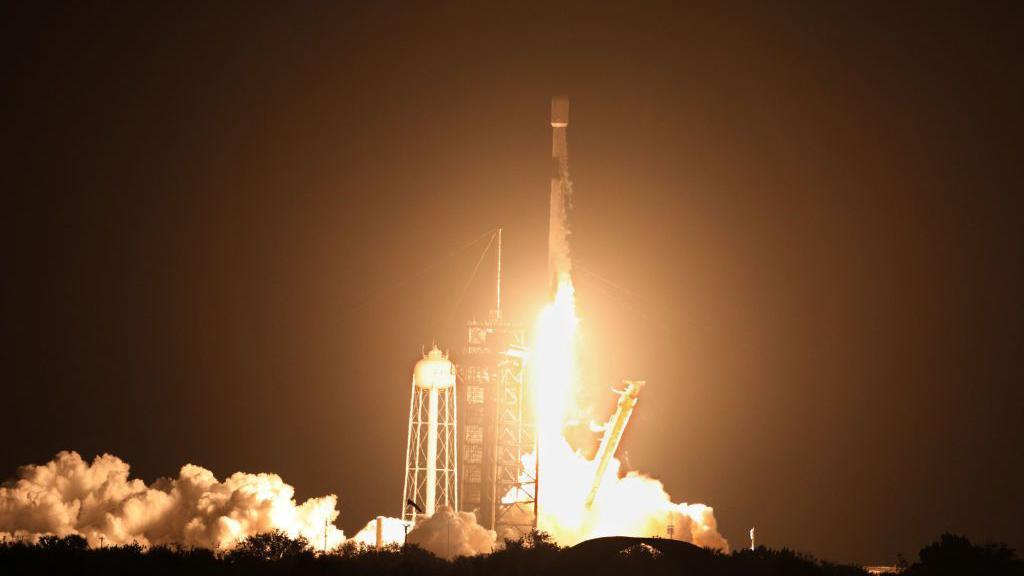
A Falcon 9 upper stage launched in January 2025 is slated to smash into the Moon on 5 Aug 2026 at 02:35 EDT.
The booster, travelling at about 2.43 km s⁻¹ (≈5,400 mph) and weighing roughly 4,000 kg, is projected to hit near the Einstein Crater on the Moon’s daylight side. Scientists estimate it will leave a new crater exceeding 17 m in diameter.
Unlike Earth, the Moon’s weak gravity and lack of atmosphere mean the impact will flash spectacularly and eject a dust plume that may rise up to 50 km. Telescopes worldwide, including NASA’s Lunar Reconnaissance Orbiter and South Korea’s Danuri probe, will monitor the event.
While the collision poses no risk to Earth, it offers a unique laboratory for studying impact physics and the Moon’s subsurface. Amateur astronomers and citizen‑science projects are encouraged to film the flash for later analysis.
Experts also warn that this accidental crash highlights the growing problem of space debris. With over 54,000 tracked objects larger than 10 cm orbiting Earth, cascading collisions could threaten future missions.