In brief
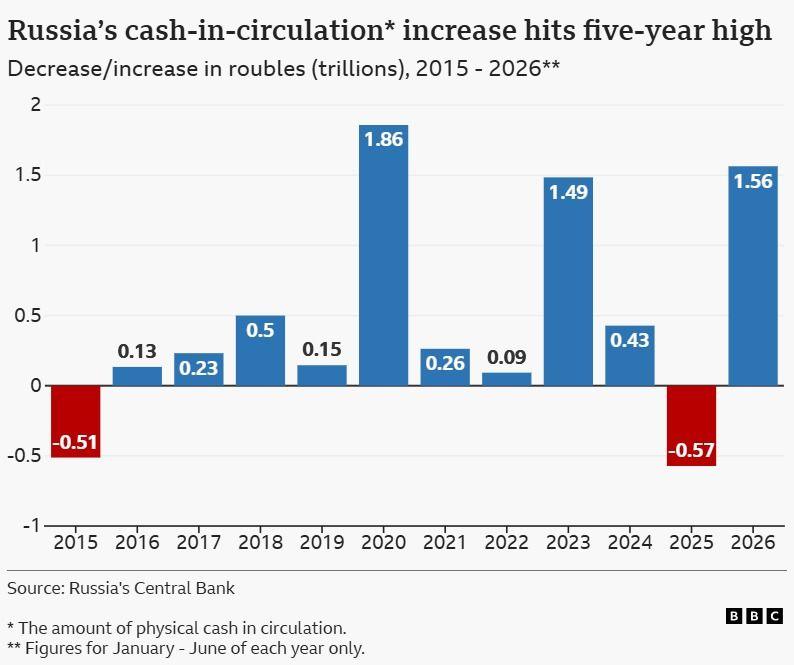
Since January, 1.56 trillion roubles have been added to cash in circulation as mobile internet cuts disrupt card payments amid Ukrainian drone attacks. Higher VAT rates and lower purchase registration thresholds push small businesses toward cash‑only transactions to evade taxes. The surge hampers state revenue collection at a time of widening budget deficit and high war spending. Despite high bank deposit rates, many Russians keep money on hand, viewing it as a safeguard against network failures.
A sudden surge in cash withdrawals has emerged as Russians face unstable digital payments and higher tax burdens, forcing more citizens to rely on banknotes for everyday purchases.
Since January, the Central Bank reports an addition of 1.56 trillion roubles to cash in circulation — the biggest increase since before Covid‑19 — as mobile internet shutdowns following Ukrainian drone attacks limit card payments.
The shift to cash is not just a matter of convenience. Higher VAT rates and a lower register threshold have pushed many small businesses off the formal register, encouraging cash‑only sales to dodge taxes.
Economists warn the trend undermines the state's ability to collect revenue, especially as the budget deficit widens and war spending increases.
Despite attractive bank deposit rates, the instinct to keep money ‘under the mattress’ persists, with roughly 550 billion roubles withdrawn in May alone, including large sums from fixed‑term deposits.
For many, cash offers a sense of security in case networks fail during military threats, but for the government, it represents an enduring challenge to sustain a war‑driven economy.