

Rebel‑forced Conscripts: Myanmar’s War Reaches a New Brink
Five months into the civil war that erupted after the 2021 coup, the junta’s power has begun sliding deeper into the jungles of Bago and Karen states. The newest twist? An army that grew by forcing young civilians into service and now has to wage battle against the very recruits it once groomed.
Quentin Sommerville and colleagues stumbled on a hidden rebel camp where four men—aged 19 to 25—shared stories of forced military recruitment. One was a chef dragged off the street after the army intercepted his lack of identification. Another returned from a karaoke session, and a third, a forestry worker, was forcibly signed up. The fourth entered a form of “alter‑ego” by being drug‑slipped and framed.
“Before we even understood what was happening, we were sent straight to the front lines,” said one, describing bruised shoulders and sleepless nights. A month later, when they attempted a brief escape, they got captured by the People’s Defence Force (PDF) and now live under rebel command.
Ko Kaung, a PDF battalion commander, argued that the junta’s newly introduced conscription law—effective 2024—has amplified the military’s manpower at a cost. “Unlimited conscripts give the army human resources across the battlefield,” he said, noting the PDF’s constrained supplies but growing numerical advantage.
The rebels hold an abandoned military base in Hpapun, an outpost that has seen waves of air strikes and artillery. Co‑captain Da Wa told us, “We’re preparing for push‑back; two thousand soldiers are converging.”
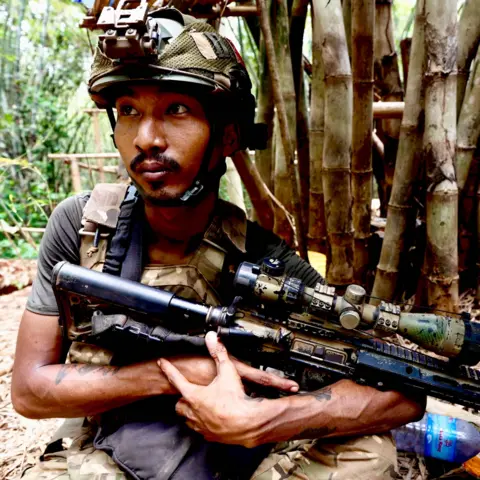
In the field hospital, Dr. Saung—who once trained in the army—runs a rudimentary clinic powered by solar panels, but shortages of ammunition and medical supplies are a constant threat. He uses personal experience to motivate young fighters: “If we stay idle, future generations will bear the burden of our indifference.”
Rebel fighter Kyar Soe survived a landmine that sliced his right leg, underwent a titanium reconstruction, and vows to return to the battlefield. A doctor states, “We’ll keep fighting until the end. Resistance is the only path for peace.”
The war’s human cost is extreme. Half a million remain displaced, thousands dead, and >700 killed by mines alone. Amid the turmoil, a new generation of childbirths occurs in makeshift hospitals, demanding a different future for Myanmar.
The junta’s alliance with China supplies air power and drone technology, leaving rebels in a constant state of guerrilla warfare. Yet they cling to old‑school resilience, relying on community solidarity and the hope that freedom will eventually prevail.

