In brief
On the night of July 30, tens of thousands of migrants swam into Spain’s Ceuta, only to be escorted back to Morocco amid a deadly surge that left 67 bodies recovered from the sea. The exodus has inflamed political discourse: Spain’s prime minister accused the EU of political attack, while Italy’s Giorgia Meloni temporarily halted Schengen cooperation citing security threats. Social‑media posts promising an “easy route to Europe” appear to have fueled the wave, but authorities claim many migrants were motivated by simple, well‑known coastal paths. The EU is convening an emergency meeting to bolster external borders as Spain extends its sea fence and increases travel checks, yet the core crisis remains rooted in conflicting narratives of migration policy and digital influence.
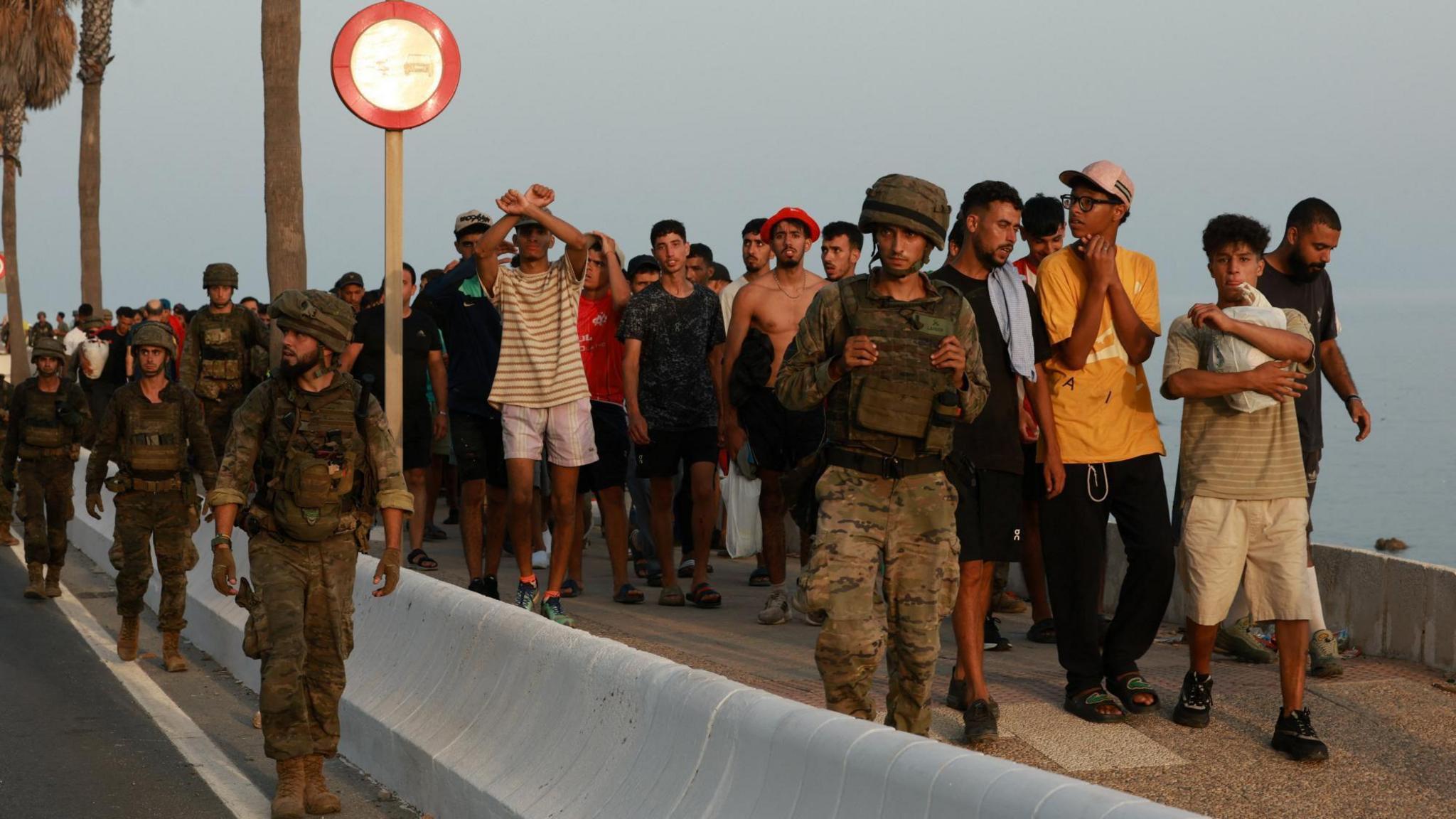
On the night of 30 July, a surge of over 30,000 migrants from Morocco crossed the narrow sea strip into the Spanish enclave of Ceuta. Spanish soldiers and police took dozens of them back across the red‑flagged waters into Morocco, while maritime patrols retrieved the bodies of at least 67 people who had drowned in the Mediterranean.
The unprecedented influx, filmed by self‑distributing migrants and burst on social‑media platforms, revivified the debate over migration policy in Europe. Posts showing plumes of feet and tongues of flag‑green water – a promise of a quick “leap” to mainland Spain – went viral, suggesting a powerful influence behind the jump‑boat phenomenon.
In Madrid, Prime Minister Pedro Sanchez launched a sharp reply to what he saw as an “attacking” attitude from EU bodies. Italian Prime Minister Giorgia Meloni, representing the right‑wing Fratelli d’Italia, saved a temporary suspension of the Schengen agreement with Spain, citing security concerns – a move that kept Ceuta politically isolated despite the enclave’s concession that it isn’t fully part of the Schengen zone. Spain is saying the crisis was contained, with no direct route into the continent, but Meloni’s political gamble appears aimed at re‑capturing anti‑migration sentiment ahead of next year’s elections.
The European Union’s heads of interior signatory are convening a crisis meeting a week after the mass arrival to discuss re‑strengthening external borders, at a time when Spain has extended its coastal fence with a new line of buoys that will patrol the waterway. Travelers from Spain to Italy will face heightened random checks for several weeks, a measure described as minimal – though it feeds the persistent narrative that migrant policy is a flimsy front for broader political agendas.
While Ceuta’s situation may have a physical lifting of the rope between two continents, the crisis speaks to a larger, digital‑age blend of social‑media hype and policy‑determined fear – a storm that could redefine how the EU frames migration and internal security in the weeks to come.