In brief
Flight AI171 crashed just moments after takeoff from Ahmedabad, raising questions about possible double engine failures, bird strikes, and operational errors. A thorough investigation involving international experts will look into the accident.
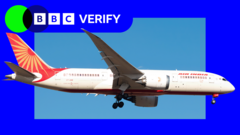
A tragic event unfolded on Thursday as Air India Flight AI171, a Boeing 787-8 Dreamliner, crashed just 30 seconds after takeoff from Sardar Vallabhbhai Patel International Airport in Ahmedabad, India. The plane, carrying 242 people, crashed into a residential area, raising immediate concerns about aviation safety protocols. Authorities have initiated an investigation, supported by experts from the US and UK.At 13:39 local time (08:09 GMT), the aircraft took off, but almost immediately, a mayday call was made by the cockpit. This alarming communication preceded the crash, which resulted in the loss of 241 lives aboard and additional casualties on the ground. Eyewitness reports and verified videos suggest the aircraft struggled to gain altitude after takeoff, reaching a maximum height of just 625 feet before descending into buildings.The flight, commanded by experienced pilots Captain Sumeet Sabharwal and Co-pilot Clive Kundar, had reportedly taken off with a full load of fuel, approximately 100 tonnes. The immediacy of the mayday alert has led experts to speculate about severe mechanical issues. The possibility of an extremely rare double engine failure has been raised, leading some to question whether the aircraft's Ram Air Turbine (RAT) was activated to assist with essential systems in such a malfunction.Investigators will analyze the flight's black box data and debris to uncover what went wrong. Potential causes include catastrophic scenarios like fuel contamination or clogging, which could lead to unexpected engine shutdowns. Pilot insights suggest that the Ahmedabad airport's notorious bird population might have played a role, as bird strikes can severely impact engine performance, although no definitive evidence currently supports this theory.Experts also pondered whether the failure to deploy flaps—critical components for takeoff lift—could have contributed to the crash. Given Ahmedabad's high temperatures reaching 40°C (104°F) during the incident, the plane would have required higher thrust and flap settings for a successful takeoff. However, this potential human error remains in dispute, as protocols for flap settings are strictly enforced.As investigations continue, both Boeing and engine manufacturer GE Aerospace have pledged full assistance, while the world watches for answers to this devastating event in aviation history.