In brief
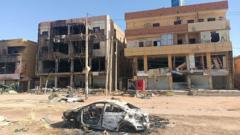
In a statement, Sudan's army declared Khartoum state fully cleared of paramilitary Rapid Support Forces (RSF), following a series of bloody confrontations that have left the country's capital in ruins. The declaration underscores the military's recent successes in regaining control but also hints at escalating tensions across the nation.
The civil war in Sudan has reached a new milestone, as the Sudanese military announced that it has entirely expelled the paramilitary Rapid Support Forces (RSF) from Khartoum state. In an official statement released through Sudan's News Agency, the military proclaimed that “Khartoum State is completely free of rebels,” reflecting a significant shift nearly two months after the military regained control over the city of Khartoum, including the presidential palace.On Tuesday, reports of continued fighting surfaced from the city of Omdurman, which is part of the capital region and also located within Khartoum state. Following the military's claim, ongoing hostilities indicate that tensions remain high. The army had previously launched a “large-scale offensive” in Omdurman, aiming to assert dominance amid the conflict.Historically, Khartoum served as the epicenter of Sudan's government, but the military command has since relocated east to Port Sudan due to the RSF's control of the area. Despite Port Sudan being regarded as a relatively safe haven, it has recently been overwhelmed by violence, including drone attacks earlier this month attributed to the RSF by the army. These assaults led to critical damage to infrastructure, resulting in severe water shortages and extended blackouts affecting civilians.The conflict has broader diplomatic implications, particularly concerning the relationship between Sudan and the United Arab Emirates (UAE). Sudan has accused the UAE of supporting the RSF, an allegation that has been staunchly denied by the Gulf nation. The UAE referred to these claims as "unfounded allegations," further complicating the situation.As the civil war continues into its third year, the humanitarian impact remains dire, with thousands deceased and millions displaced. Both factions, the Sudanese army and the RSF, face allegations of committing war crimes, claims that they categorically deny.This ongoing violence continues to create one of the world's most significant humanitarian crises, and the latest military successes highlight a fragile and unstable landscape for Sudan's citizens.