In brief
The recent seismic event has inflected further damage to an already dire situation for millions.
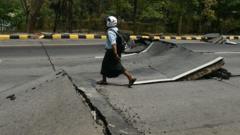
In a tragic development for Myanmar, a powerful 7.7 magnitude earthquake struck central Myanmar on Friday, impacting the city of Sagaing and causing significant destruction in Mandalay, the country's second-largest city, and even reaching the capital, Nay Pyi Taw. This calamity comes at a time when Myanmar is already grappling with a four-year civil war, a dire food crisis, and a struggling economy. The communication infrastructure in the affected regions is severely compromised, complicating information flow. Many residents are living without electricity, and mobile networks are unreliable, making it hard to ascertain the full extent of the devastation. Foreign journalists face increased barriers to entry, limiting external reporting efforts in this already volatile landscape. Myanmar's tumultuous history began with the end of British rule in 1948. The country appeared to make strides towards democracy in 2011, leading to elections in 2015 won overwhelmingly by Aung San Suu Kyi’s National League for Democracy (NLD). However, this progress was abruptly halted in February 2021 when the military orchestrated a coup, detaining Suu Kyi and other key leaders while alleging electoral fraud. The coup ignited widespread protests, which the military responded to with violent repression.As peace protests evolved into an armed insurgency, battles intensified between the military and ethnic armed groups, leading to an all-out civil war. The chaos has displaced over 3.5 million people, and humanitarian conditions have worsened, with starving civilians experiencing unprecedented levels of food insecurity. United Nations reports highlight massive funding shortages for aid workers, which will exacerbate the plight of those affected by the ongoing conflict.Now, alongside the brutal realities of war, the earthquake has further complicated the situation. Reports suggest a hospital in Nay Pyi Taw has been transformed into a mass casualty center, overwhelmed by patients as its emergency building gave way. As the military government amidst this crisis declared states of emergency and sought international aid, uncertainty looms over how they will manage the new surge of humanitarian needs while still embroiled in warfare. With a fragile populace and deteriorating conditions, every challenge compounds another, and an already struggling Myanmar faces an uncertain future as it navigates through devastation, both natural and man-made.