In brief
Recent Israeli air strikes in Dahieh, a suburb of Beirut, have reignited fears of a return to war among residents and school officials. The strikes, which targeted a Hezbollah facility, have left the community traumatized and uncertain about the future.
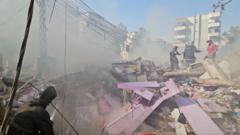
In Beirut's southern suburb of Dahieh, chaos erupted on what started as a typical Friday afternoon when a warning from the Israel Defense Forces (IDF) circulated on social media. The urgent alert marked a targeted building believed to house Hezbollah operations and prompted immediate evacuations of nearby schools, sparking panic among parents trying to collect their children.Ahmad Alama, director of St Georges School, was caught amidst the turmoil. He described the frantic scene: parents rushed to retrieve their kids, while residents evacuated the area in fear of imminent airstrikes. "It was total chaos," he remarked. The situation escalated as Israeli forces subsequently destroyed the indicated building, which they claimed contained equipment for Hezbollah drones.This incident marked the first airstrike in Dahieh since a ceasefire was established following last November's war between Israel and Hezbollah. The chaos unfolded shortly after two rockets were fired from southern Lebanon toward northern Israel, which were claimed to be a breach of the ceasefire by Israeli authorities. Hezbollah denied any involvement in the rocket incident.Although a ceasefire had brought an end to the 13 months of conflict between Israel and Hezbollah, the recent aerial bombardments have reawakened fears among the school's community. Mr. Alama acknowledged the persistent tension: "We thought the war had ended with the ceasefire, but unfortunately, we’re still living it every day."St Georges School, serving around 1,000 students, has implemented evacuation drills and plans for emergencies to ensure safety amid the uncertainty. "Pupils shouldn't pay the price for something they aren't responsible for," Mr. Alama commented, emphasizing the need for children to engage in extracurricular activities to help alleviate their stress.Five months post-ceasefire, the haunting remnants of the previous conflict linger in Dahieh, with 346 buildings reported destroyed and many more damaged. The suburb, once deserted, has seen a resurgence in daily life, yet signs of destruction loom large, fostering a pervasive atmosphere of dread.As children return to classes, some have expressed hesitation, their parents wary of potential health risks amid ongoing construction and debris. Those who lost their homes have received financial aid from Hezbollah for rent, but schools are yet to see any support toward restoration.Despite assurances from the Lebanese government for a reconstruction fund estimated at $11 billion, international donors are likely to impose conditions that many believe are still a distant prospect. As rubble is expected to clear by year's end, the outlook for redevelopment remains uncertain, casting a shadow over the resilience of Dahieh's community.