In brief
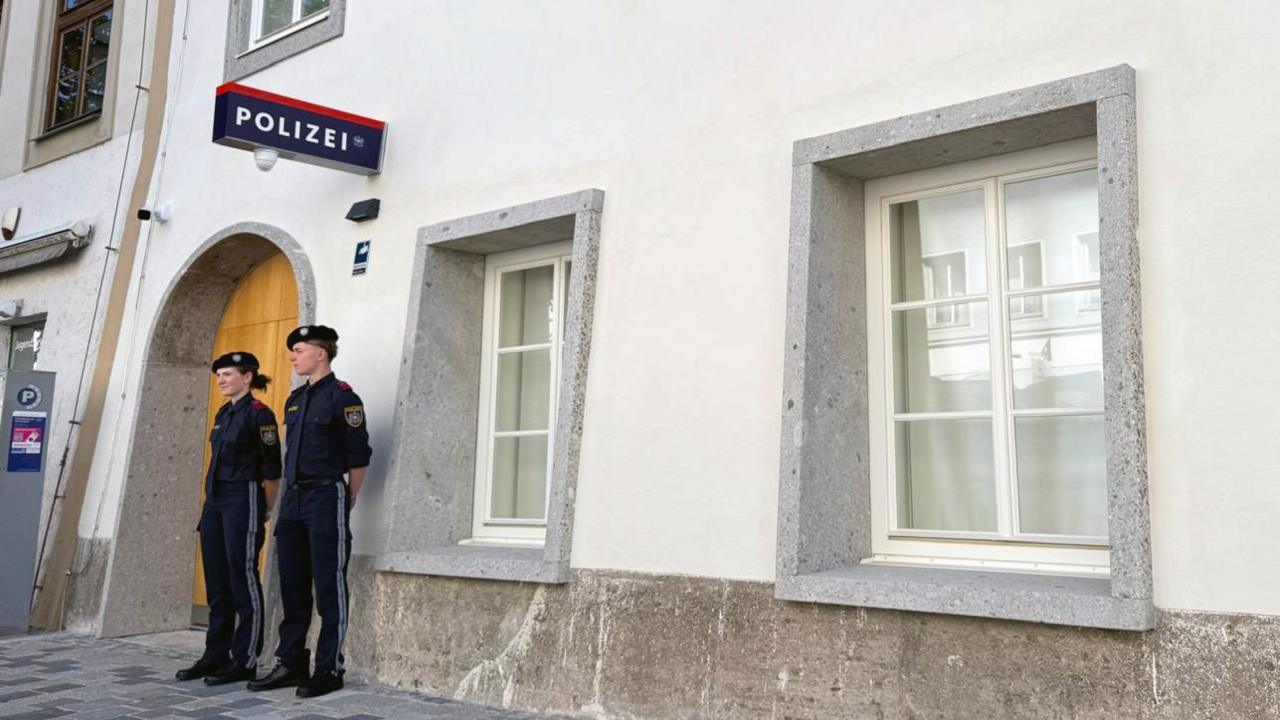
Austria has opened a police station inside the 17th‑century house where Adolf Hitler was born in Braunau am Inn, sparking debate over how to handle the site’s dark past. The building, once an inn, has been refurbished in a white façade and now hosts a modern police precinct equipped with security cameras. Interior Minister Gerhard Karner spoke of a new chapter in the building’s history, calling it a place of democracy and law‑and‑order. Critics argue the decision sends an ambiguous message and challenges the town’s responsibility for confronting its Nazi heritage. A memorial stone outside the site warns against fascism and commemorates millions of dead.
In a move meant to erase the echoes of the past, Austria has opened a police station in the house where Adolf Hitler was born in 1889, in the town of Braunau am Inn.
The former inn, a 17th‑century yellow building until recently, was substantially refurbished, its façade painted white and the interior fitted with oak and modern furnishings. The police precinct boasts security cameras and a restrained décor that has no overt Nazi symbolism.
Interior Minister Gerhard Karner, who attended the opening ceremony with police musicians, said the building would now become a place of democracy, rule of law, security, freedom and human dignity, marking a “new chapter” for the site. The police station was intended to deter neo‑Nazi pilgrimage and preserve the memory of the town’s involvement in a dark history.
Some local voices argue the transformation may send a wrong signal. Historian Florian Kotanko would have preferred the building to return to the Lebenshilfe charity, which previously operated a day centre in the space, but declined to profit from the controversy. Critics assert that erasing the house’s historical identity risks denying responsibility for Austria’s Nazi past.
The building is marked by a memorial stone outside, erected in 1989, which reads Never again Fascism; In memory of millions of dead. The stone originates from the former concentration camp at Mauthausen, and the site hosts no obvious sign indicating its historical background. This subtle approach reflects the delicate balance Austria seeks to maintain between remembrance and preventing extremist rallying points.