In brief
Azerbaijan’s education ministry has moved to enforce new uniform guidelines that effectively ban hijabs, sparking unprecedented protests across Baku and the south. Teenagers and mothers, many of whom hold the prohibition as a religious penalty, have taken to school gates, chanting slogans and demanding freedom of religious expression. The crackdown comes amid a fragile secular state ruled by Ilham Aliyev, whose regime has historically cracked down on dissent. The ban has ignited a diplomatic row with Ankara, as Turkish officials and opinion leaders criticize the policy as anti‑Muslim and intrusive. The dispute may strain Baku‑Ankara ties and underscore the differing balance each country holds between secularism and religious identity.
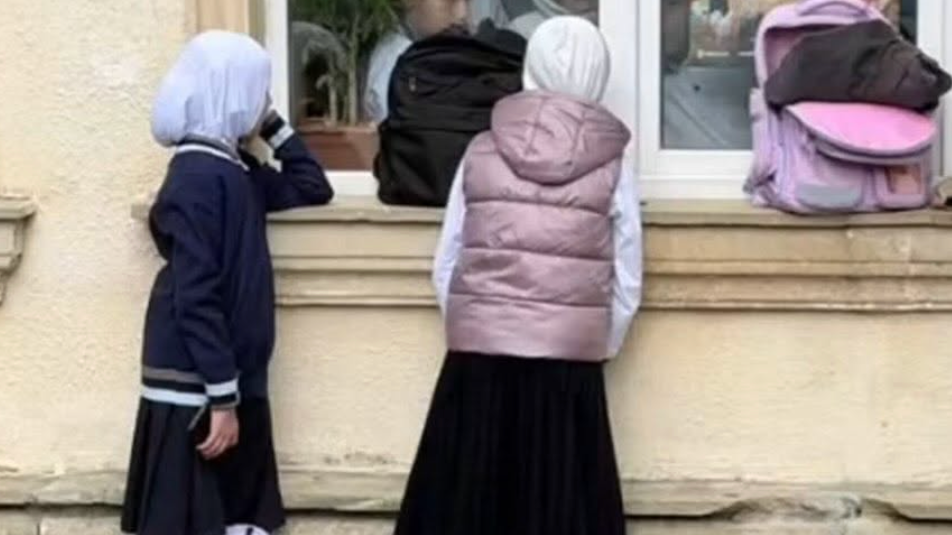
“You are telling me, I can’t come to school?” a teenage girl in a navy blue Islamic headscarf shouted at a school staffer at Baku’s School No. 69—her voice echoing across the square and instant‑messaging feeds.
Her friends clapped in solidarity, chanting, Why should I give up my religion? The clip, filmed on a school’s stoop, has already gone viral, drawing millions of views and dozens of comments that label the law as a veiled attack on faith.
The ministry unveiled the new uniform rules on 21 September, stipulating that any clothing that contradicts the “principle of secularism in education” is banned. Although the language does not mention the hijab outright, the effect is unmistakable. On Monday authorities – backed by the interior ministry – turned away dozens of girls wearing headscarves, triggering spontaneous demonstrations in Baku, Masally, Jalilabad and other towns.
The protests are unusual for a country of 10.5 million whose president, Ilham Aliyev, has ruled since 2003 and has little tolerance for dissent. Opponents, independent journalists and critics routinely find themselves behind bars or silenced. Yet the new ban has sparked a public outcry that echoes through the streets, breaking the government’s long‑held image of apolitical compliance.
Baku’s closest ally, Turkey, has not remained silent. Ankara’s officials and Islamist groups have called the new rules “unacceptable” and urged a reversal. President Recep Tayyip Erdoğan, who has drafted a “pious generation” agenda, said a headscarf is not a barrier but a sign of faith—and that Baku must “open eyes” to the reality of religious expression. The Turkish Ministry of Foreign Affairs warned that Ankara would “be careful of any breach in protocol” and that the ban risked “damaging” ties.
Inside Azerbaijan, the order has already led to detentions. Interior Service claimed 37 people were detained on Monday for “gross public order violations” while some schools have settled to adopt new uniforms, as shown in an official video released by the ministry on 10 October. Several parents, however, have reported being warned that they must either remove their children’s hijabs or face imprisonment.
In a broader context, the ban sends ripples across the region. Azerbaijan navigates a tense balancing act between its secular constitution, its Shia majority, its Turkic ties to Turkey and its relationship with Israel, which supplies arms. Turkish protests outside the Azerbaijani embassy in Ankara and the consulate in Istanbul exemplify the diplomatic flare that has been ignited.