In brief
A recent AP-NORC poll shows that approximately 60% of Americans hold both President Trump and Republicans responsible for the ongoing government shutdown, while 54% believe Democrats share blame. As the impasse continues, flights are getting delayed and countless federal workers are either furloughed or unpaid. The shutdown is viewed as a significant problem by many, highlighting the urgency for a bipartisan solution ahead of the pivotal 2026 midterm elections. Notably, 54% of the public considers it a major issue, with Democrats and independents most likely to express concern.
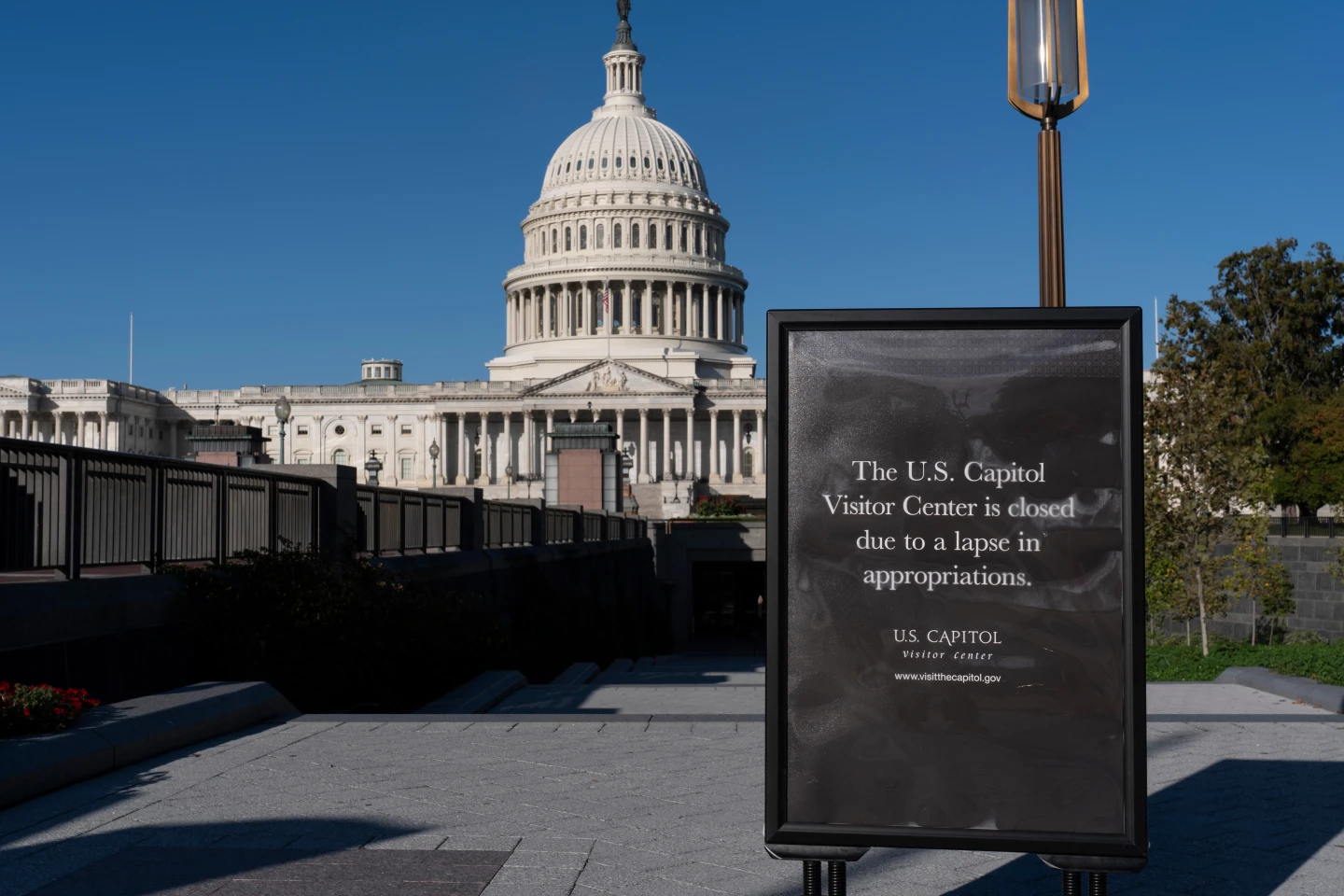
WASHINGTON (AP) — As the government shutdown drags on with no end in sight, a new AP-NORC poll finds that most Americans see it as a significant problem — and all major players are being blamed.
Roughly 6 in 10 Americans say President Donald Trump and Republicans in Congress bear significant responsibility for the shutdown, while 54% say the same about Democrats in Congress. At least three-quarters believe each side deserves at least a “moderate” share of blame, indicating no one is evading accountability.
This poll, conducted as the shutdown extends into its third week, reveals that travelers have started to feel the disruptions as flights are delayed and hundreds of thousands of federal employees are furloughed or working without pay, beginning to miss paychecks.
With a growing public sentiment, 54% of U.S. adults categorize the shutdown as a “major issue,” notably more Democrats (69%) and independents (59%) than Republicans (37%). House Speaker Mike Johnson remarked that the country is “barreling toward one of the longest shutdowns” in history.
Further emphasizing the gravity of the situation, a federal judge has temporarily blocked the Trump administration from firing workers amidst the shutdown. Sophia Cole, a 38-year-old Republican mother expressed frustration, stating both parties need to reach a compromise, placing ultimate responsibility on Trump.
As federal workers report growing economic hardships, many Americans are anxious about the repercussions of a prolonged shutdown. Meanwhile, Democrats are fighting to extend health care subsidies, while Republicans refuse to negotiate until funding is passed. Voter opinions show that both parties see little increase in favorability amid the crisis, with confidence in Congress remaining extremely low, as only about 4% of respondents express strong confidence in its operation.