In brief
The situation in Kakuma refugee camp is increasingly dire as funding cuts from the United States have resulted in slashed food rations, leaving refugees vulnerable to starvation. Approximately 300,000 individuals reside in the camp, many suffering from severe malnutrition, particularly children.
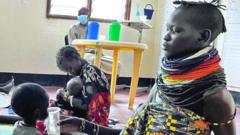
As the sun blazes overhead in Kakuma, the effects of US funding cuts to the World Food Programme (WFP) are painfully visible. The camp, sheltering hundreds of thousands fleeing conflict across Africa and the Middle East, faces unprecedented food shortages. Aid cuts have reduced refugees' food rations to just 30% of the minimum dietary recommendation, leaving families to struggle for survival. At Amusait Hospital, emaciated children receive emergency treatment for acute malnutrition, and mothers express their despair as they struggle to feed their families. Agnes Awila, a refugee from Uganda, asks, "If there's no food, what do you feed them?" Many families, like those of infants Hellen and James, are now surviving on one meal a day. Previously, the US supplied approximately 70% of WFP funding in Kenya, but recent aid reductions have led to dire consequences. Félix Okech, the WFP's head of refugee operations in Kenya warns, "If we have a protracted situation where this is what we can manage, then basically we have a slowly starving population." As aid distribution becomes increasingly precarious, refugee mothers like Mukuniwa Bililo Mami, who arrived in the camp over a decade ago, lament how decreased rations and the loss of cash assistance—previously allocated to help buy essential supplies—have forced them into dire living conditions. The withdrawal of cash transfers has also impacted local economies. Traders, like Badaba Ibrahim, hear desperate pleas from customers unable to afford food, as many families resort to begging for assistance. In another part of the camp, single mother Agnes Livio struggles to provide for her five sons, with their first meal of the day now delayed until the afternoon.Despite medics working tirelessly in Amusait Hospital to care for malnourished infants, the outlook remains grim. With aid prospects dim, Okech expresses concern for the future: "Unless things change over the next two months, the refugees are staring at starvation come August." The international community is urged to respond quickly to prevent further loss of life in these vulnerable populations as hopes for immediate funding remain uncertain.