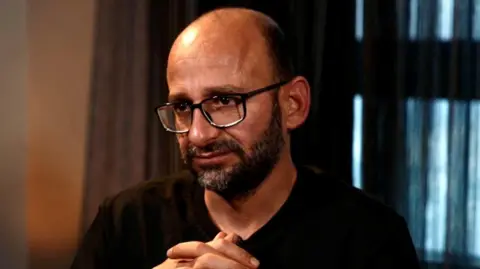
WASHINGTON (AP) — The Department of Homeland Security has dropped its plan to deport a Chinese national who entered the country illegally, two rights activists said Monday, after his plight raised public concerns that the man, if deported, would be punished by Beijing for helping expose human rights abuses in China’s Xinjiang region. Rayhan Asat, a human rights lawyer who assisted in the case, reported that Guan Heng's lawyer received a letter from DHS stating its decision to withdraw its request to send Guan to Uganda. She expressed hope that Guan's asylum case will now proceed smoothly and favorably.
Zhou Fengsuo, executive director of Human Rights in China, confirmed the administration's decision and expressed satisfaction. The Department of Homeland Security did not immediately comment on this announcement, and Guan, 38, remains listed as a detainee in Immigration and Customs Enforcement’s database.
Guan's legal team is actively working to secure his release from an ICE detention facility in New York. In 2020, he secretly filmed detention facilities in Xinjiang, believed to house up to one million ethnic minorities, particularly Uyghurs, with accusations of human rights abuses repeatedly denied by Beijing, asserting they are vocational training facilities.
Knowing he could not release the video footage while in China, Guan left for Hong Kong in 2021 and later traveled through Ecuador to the Bahamas, where he eventually made his way to Florida via an inflatable boat. His footage, released on YouTube, provided crucial evidence of rights abuses in Xinjiang. However, concerns arose when his family back in China was subsequently targeted by authorities.
Public support for Guan has surged recently, including calls from U.S. lawmakers to provide him safe haven amid fears for his safety. The Tom Lantos Human Rights Commission of Congress highlighted the moral responsibility of the U.S. to protect those who expose human rights abuses, asserting that Guan Heng deserves sanctuary in the U.S. against a backdrop of consistent threats from the Chinese government.
Zhou Fengsuo, executive director of Human Rights in China, confirmed the administration's decision and expressed satisfaction. The Department of Homeland Security did not immediately comment on this announcement, and Guan, 38, remains listed as a detainee in Immigration and Customs Enforcement’s database.
Guan's legal team is actively working to secure his release from an ICE detention facility in New York. In 2020, he secretly filmed detention facilities in Xinjiang, believed to house up to one million ethnic minorities, particularly Uyghurs, with accusations of human rights abuses repeatedly denied by Beijing, asserting they are vocational training facilities.
Knowing he could not release the video footage while in China, Guan left for Hong Kong in 2021 and later traveled through Ecuador to the Bahamas, where he eventually made his way to Florida via an inflatable boat. His footage, released on YouTube, provided crucial evidence of rights abuses in Xinjiang. However, concerns arose when his family back in China was subsequently targeted by authorities.
Public support for Guan has surged recently, including calls from U.S. lawmakers to provide him safe haven amid fears for his safety. The Tom Lantos Human Rights Commission of Congress highlighted the moral responsibility of the U.S. to protect those who expose human rights abuses, asserting that Guan Heng deserves sanctuary in the U.S. against a backdrop of consistent threats from the Chinese government.