In brief
Luis Manuel Otero Alcántara, a key figure in Cuba’s San Isidro Movement, has fled to the United States following a five‑year sentence in Guanajay prison. Formerly arrested during the country’s largest anti‑government protests in 2021, Otero’s escape highlights the escalating diplomatic friction between Washington and Havana. The Cuban regime accuses the movement of receiving U.S. backing, a claim the group denies, while U.S. officials, including Secretary of State Marco Rubio, have condemned Cuba’s crackdown. Otero, who publicly called for the end of the Castro dynasty, arrived in Miami to cheers from supporters. His exile underscores broader U.S. initiatives aimed at political reform in Cuba amid an intensified sanctions campaign.
Luis Manuel Otero Alcántara, 38, the outspoken leader of the San Isidro Movement (SIM), made headlines on Sunday when he fled Cuba for the United States after serving a five‑year sentence at Guanajay maximum‑security prison.
The SIM, composed of artists, journalists, and intellectuals, has long campaigned for free speech and democracy in the country. Otero was detained during the 2021 anti‑government protests—Cuba’s largest in decades—when security forces cracked down on demonstrators. While in detention, his whereabouts were unclear; the Cuban government kept him in an undisclosed facility as the United States reviewed a parole request.
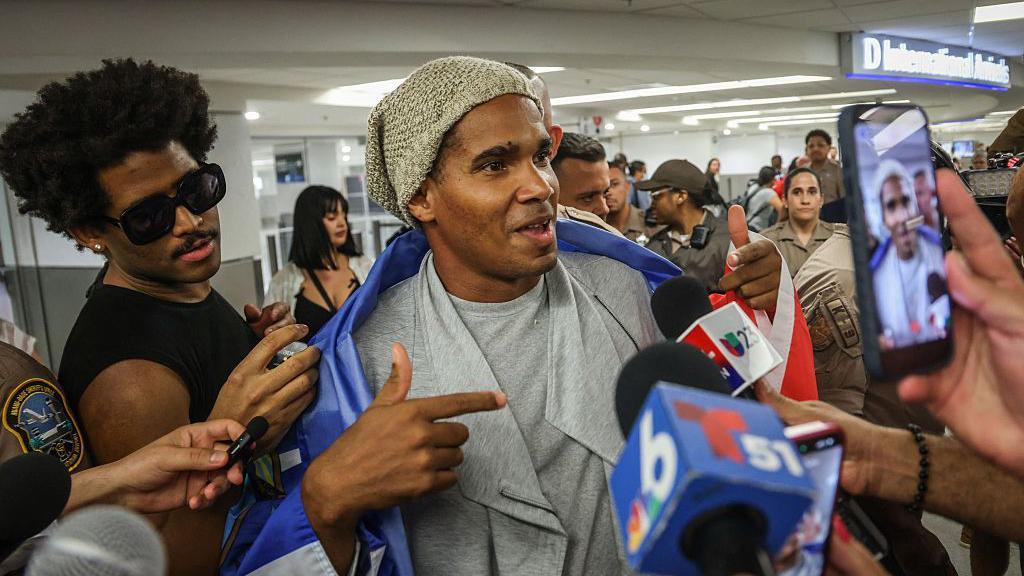
Emerging from the Miami airport, the dissident was greeted by supporters who sang the Cuban national anthem, and he raised the “L” hand gesture, a recognized symbol for “Libertad” (freedom). “I believe the dictatorship must end and the Castro dynasty must end,” Otero said to journalists, adding that corruption would persist with a Castro in power.
Cuban authorities allege the SIM receives funding from Washington and acts as a subversive element, allegations that the movement rejects. Many SIM members report constant surveillance and arbitrary detentions by state security forces.
U.S. Secretary of State Marco Rubio condemned the Cuban regime’s brutal crackdown, calling it a reminder of the “unique misery and evil” inherent in the communist system. He praised Otero for his refusal to remain silent and for using art to demand daily freedoms denied to Cubans over nearly seven decades.
The ex‑inmate’s escape is part of a broader U.S.‑Cuba diplomatic strain, with Washington repeatedly responding to Cuba’s human‑rights record. The case, along with that of fellow SIM member Maykel Castillo—currently serving an eight‑year sentence—has strained U.S. relations, especially after allegations of an oil blockade and talks about potential military intervention. The sanctions and embargoes have deepened Cuba’s fuel crisis, leading to blackouts and food shortages, and drastically cut tourism, with fewer than 360,000 visitors in the first five months of 2026, a near‑60% drop from a year earlier.
While Cuba’s leadership urges a peaceful resolution, Washington remains skeptical, warning that a negotiated settlement is unlikely. The exodus of dissidents such as Otero reinforces the urgency of U.S. policy toward free‑speech and democratic reforms in Havana.