In brief
In a Boston courtroom a forensic psychiatrist testified that Lindsay Clancy suffered a command hallucination when she strangled her three children in January 2023. The defence claims her mental illness left her unable to control her actions, while prosecutors argue she acted deliberately. The case highlights the legal implications of postpartum psychosis and whether it can excuse criminal behavior. The jury will decide if Clancy’s mental state mitigates responsibility. The story joins a growing conversation about maternal mental health, domestic violence and the justice system.
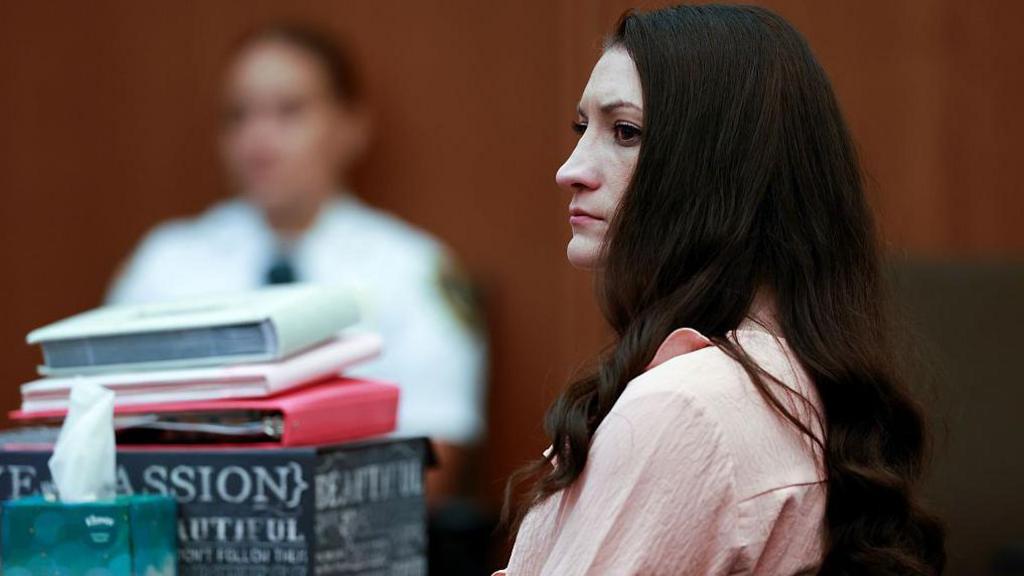
A Boston court heard, Friday, forensic psychiatrist Phillip Resnick testify that Lindsay Clancy was suffering a “command hallucination” when she strangled her three children in January 2023. Specifically, the defendant believed she was following a verbal command, unable to discern right from wrong.
The defence, which is now concluding its case, argues that Clancy’s postpartum psychosis forced her to act, and thus she pleads not guilty. Prosecutors counter that she deliberately chose to kill her children—Cora, five; Dawson, three; and Callan, eight‑month‑old—by using fitness bands before leaping from a second‑floor window.
Resnick explained that on that fatal day the defendant exhibited not only a command hallucination but also a “delusion of influence,” making her believe that she was “doing her children a favour” by bringing them to heaven. He underlined that Clancy was unable to control her conduct and that she had been in an acute mental state since before the killings.
Clancy’s mother and former mother‑in‑law testified earlier this week that her daughter’s mental health deteriorated after the birth of her youngest son. A family lawyer noted that her mother “begged for help” before the tragedy. Clancy has been charged with three counts of first‑degree murder and was paralysed by a fall from a second‑floor window.
The National Health Service defines postpartum psychosis as a rare, serious mental illness that can emerge soon after childbirth. The NHS stresses that it differs from the “baby blues” and requires emergency treatment.
If you or a loved one is having thoughts of self‑harm or feeling deep despair, please contact a trusted health professional or use a helpline. Help is available in many countries through Befrienders Worldwide (www.befrienders.org). In the United Kingdon, the BBC Action Line provides a list of support organisations (bbc.co.uk/actionline).