In brief
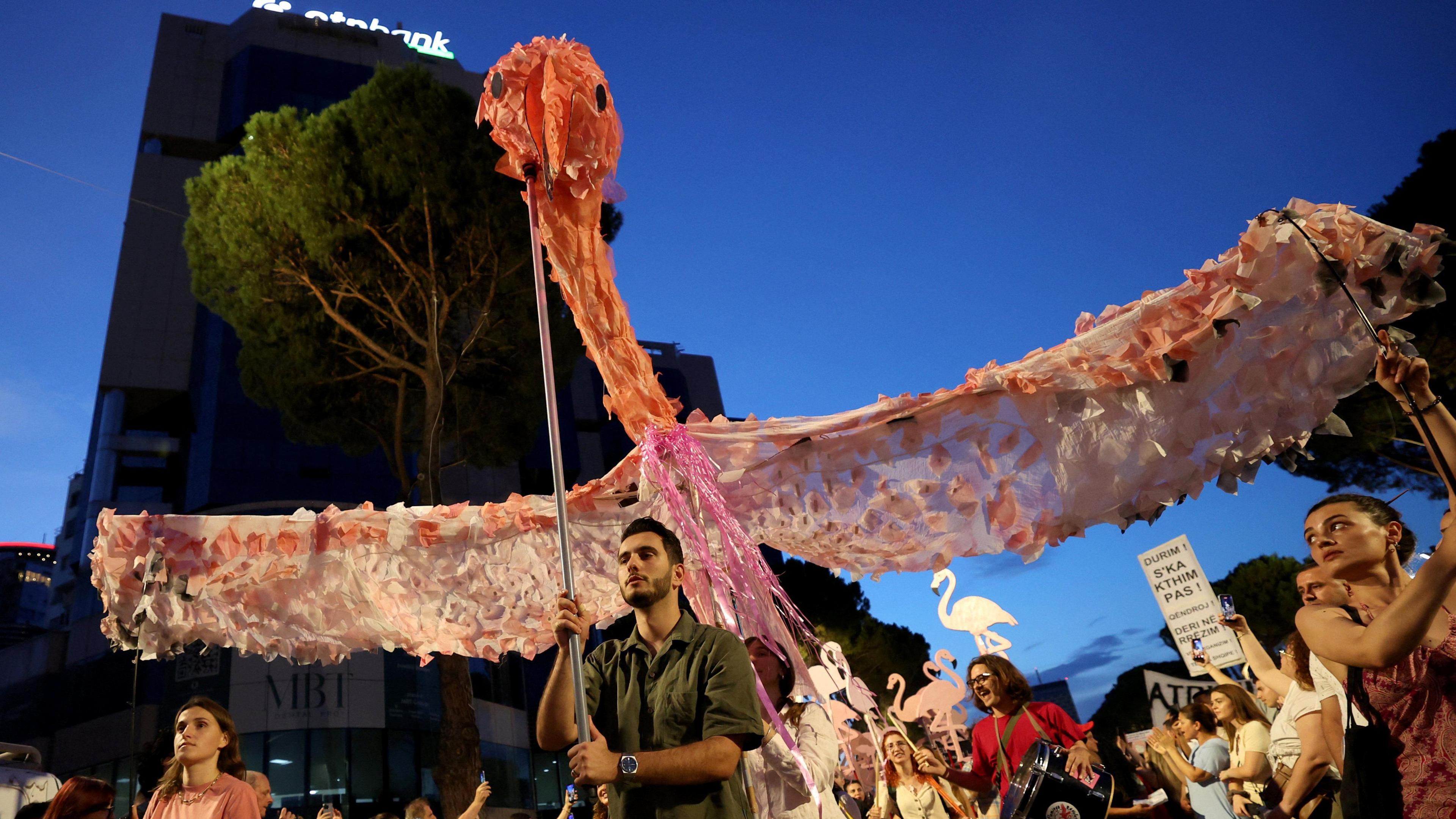
What began as a niche protest against a luxury resort plan near Narta Lagoon has ballooned into a sweeping anti‑government movement in Albania. Thousands of protesters, armed with flamingo‑themed signs, now chant for better schools, jobs and a resigning Prime Minister as they confront police violence and allegations of corruption. The movement highlights growing discontent with 13 years of prime ministerial rule, the rapid urbanisation of Tirana and the country’s contentious EU accession path.
Thousands in Tirana have crammed into protest marches, clutching flamingo‑flyers that have become the rallying icon of a movement demanding the resignation of Prime Minister Edi Rama.
The protests started last month as opposition to a luxury resort adjacent to the precious Narta Lagoon, where flamingos thrive. Since then the chant has broadened: demonstrators now call for better schools, jobs, health care, living standards and the removal of what they say are corrupt officials and foreign investors.
Among the investors is Jared Kushner, the U.S. President’s son‑in‑law, who has been granted “special investor” status to build a resort that, critics say, would endanger the lagoon’s wildlife and turbo‑charge Albania’s skyline.
Police have set up fencing and bulldoze trucks at the site, but no formal planning permission or environmental assessment has been issued. Just a month earlier, a security guard’s assault on a protester sparked a video that went viral and drew international scrutiny.
“I’m here for our schools, I’m here for our hospitals,” says 26‑year‑old Helena, a resident speaking to the BBC. “I want to stay in my country, I don’t want to leave.”
The protests have also highlighted fresh doubts about the integrity of the ruling Socialist Party, as senior allies of Rama are being investigated by anti‑corruption prosecutors. A high‑profile MP, Fatos Lubonja, who survived 17 years of forced labour under the Enver Hoxha regime, claims the current government is a front for organised crime, the media and foreign oligarchs.
At the same time, 25‑year‑old Majana Koceku, hand‑picked by Rama for last year’s elections, resigned from the party after she felt the PM’s leadership had lost public trust.
Rama says the protests reflect a healthy democracy, yet the government faces investigations of key officials.
Albania's skyline has morphed dramatically over the past decade, with new towers, a booming tourism sector and a race toward EU membership. Yet, the country’s rapid transformation has come hand‑in‑hand with allegations that elite projects are more money laundering than public benefit.