In brief
President Zelensky’s July 15 reshuffle ousted defence minister Mykhailo Fedorov and left a gap behind the commander‑in‑chief of Ukraine’s armed forces. A new General Mykhailo Drapatyi has been appointed, yet the political fallout is far from over. Supporters of the ousted minister still hold daily protests, arguing that Fedorov’s drive for innovation was vital to Ukraine’s war effort. Meanwhile, criticism of Zelensky’s decision grows, especially among young Ukrainians keen on a modern military leader. The crisis has deepened the gap between practical defence policy and the political narrative at home."
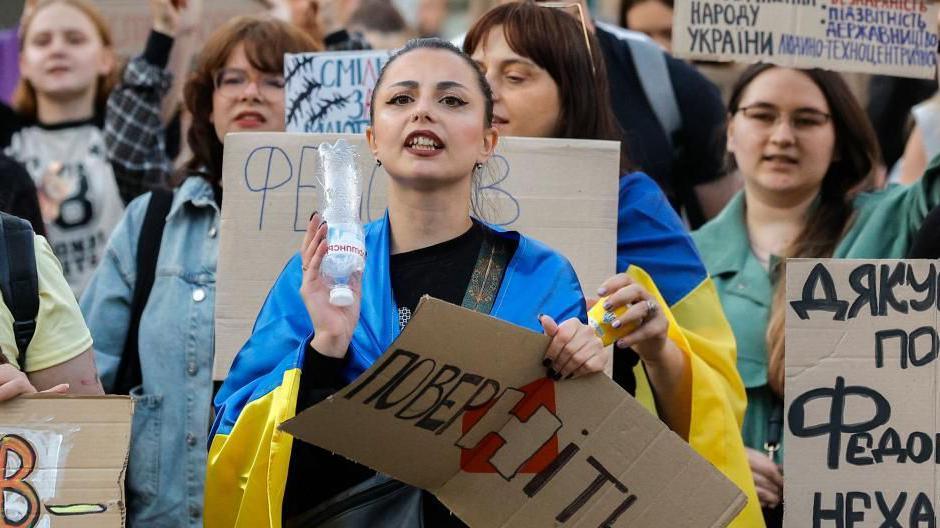
Protesters in Kyiv still demand the return of ex‑defence minister Mykhailo Fedorov
President Volodymyr Zelensky’s decision on 15 July to remove Fedorov and fill the top military post with new commander‑in‑chief Major General Mykhailo Drapatyi has sparked a wave of street protests and a deeply‑rooted political backlash that continues to ripple through Kyiv.
While the “acting” defence ministry and the fresh commander‑in‑chief may seem to resolve the immediate crisis, the reaction from the nation’s young supporters of Fedorov reveals a scandal that extends beyond the swap of appointments. Protesters in multiple Ukrainian cities hold placards that read “Bring him back,” demanding his reinstatement and expressing discontent with the government’s handling of the situation.
Fedorov himself has resisted “alternative posts” offered by Zelensky, stating only three roles would let him influence the war: defence minister, commander‑in‑chief or the presidency. Former deputy defence minister Alina Frolova echoed the sentiment, noting that without a ministry’s budget a military commander “has no real power.”
Some pundits suggest that Fedorov’s dismissal may have been a strategic move by Zelensky to curb an emerging rival. Others, including opposition MPs, view it as a misstep that has inflated Fedorov’s popularity and eroded the president’s public standing. The outcome is a division that appears to deepen as Ukraine continues to fight Russian aggression.
Despite the turmoil, Zelensky’s campaign against Russia continues in the form of “long‑range sanctions” that are already straining the Russian economy. Military life‑lines across eastern Ukraine remain largely unchanged, underlined by a 15‑30‑km “kill zone” where drones keep close watch.
In a recent message on his Telegram channel, President Zelensky highlighted the need to prepare for harsh winter conditions and ongoing energy grid challenges. He also reminded citizens that while the war exacts great costs, Ukraine’s institutions stay resilient and other countries can learn from its horizontal cooperation model.
With the summer backdrop fading and Russia’s threat looming, the political cost of the reshuffle could derail future policy initiatives if not addressed promptly. The public’s desire for a leader who reflects their values, especially a modern and anti‑corruption vision, is a key driver that will shape the next phase of Ukrainian political strategy.