
In brief
For over 13 years, the Léon Thévenin has been a beacon of hope, fixing damaged undersea cables and ensuring millions across Africa stay connected despite frequent outages.
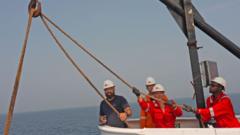
The Léon Thévenin, a ship as large as a football field and manned by over 50 engineers and technicians, sails the seas surrounding Africa to uphold the continent's internet connectivity. This essential vessel came into prominence during last year's widespread internet blackout when damaged underwater cables plunged millions in cities from Lagos to Nairobi into a state of digital darkness, crippling businesses and halting communication. Having operated for the last 13 years, the Léon Thévenin is dedicated to repairing these vital cables. Shuru Arendse, a South African cable jointer onboard, expressed pride in his work, stating, "Because of me, countries stay connected." He likened his efforts to those of heroes who save lives, affirming that communication is also a lifeline.The ship traverses waters linked by approximately 600 fibre optic cables that connect servers and data centers situated outside Africa, establishing essential virtual bridges for users. The maintenance and repairs of these cables are crucial since their functionality relies on a network that transcends borders. Benjamin Smith, the ship's deputy chief of mission, emphasized that without a cable connecting countries, individuals lose access to critical internet services.While the cables are engineered to endure for about 25 years, they are prone to damage primarily due to human activities—especially fishing and unsafe anchoring. Charles Heald, responsible for the ship's remotely operated vehicles (ROVs), highlighted that natural disasters can also wreak havoc on these connections. Past incidents include significant outages caused by ships' anchors severing three vital cables in the Red Sea and other disruptions across West and East Africa.When cable faults occur, they are diagnosed by monitoring electrical signals. If the signal drops significantly, that’s a clear indication of a problem. For situations deeper than 50 meters, the team on the Léon Thévenin springs into action, capable of addressing issues over 5,000 meters underwater.Repairs involve using advanced ROV technology that guides operations on the ocean floor to locate and rectify damages. This meticulous procedure can take hours, requiring precision and collaboration among the crew. Communication remains unaffected for users during repairs as data is diverted to alternative cables.The ship's crew, who often spend more than six months a year at sea, face personal sacrifices due to their demanding roles. Many have missed family milestones like anniversaries and weddings yet find solace in their camaraderie and the significance of their work.As Captain Thomas Quehec summarizes, despite the challenges, the Léon Thévenin crew believes they serve an essential purpose: to bridge Africa and the world, underscoring their pivotal role in today's digital age.


