In brief
Israel has declared vast areas of Gaza City unsafe, compelling residents, including those taking refuge from previous violence, to evacuate. Amidst claims of Hamas using civilian buildings for military purposes, humanitarian concerns intensify as thousands are at risk from ongoing blockades and military operations.
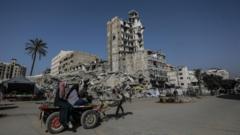
Israel's government has issued one of its most extensive evacuation orders to date for civilians in Gaza City, prompting fears of escalated military action. With large sections of the city already ravaged by previous bombings, residents have been instructed to evacuate for their safety in anticipation of intensified strikes from the Israel Defense Forces (IDF).Key structures identified by Israeli officials as targets include the Islamic University, Al-Shifa Hospital, and various former schools, which the military claims are being utilized by Hamas for "command and control." However, local authorities and humanitarian organizations emphasize that these sites are sheltering thousands of innocent civilians, who could face significant danger and potential casualties during any evacuation efforts.This evacuation order serves as an alarming indication of Israel's plans to intensify its campaign against Hamas. Among the few influential voices opposing the expansion of military operations is former Israeli Prime Minister Ehud Olmert, who advocates for immediate cessation of violence due to its detrimental impacts on both Israeli society and Gaza's civilian population. Olmert asserted that the humanitarian crisis unfolding in Gaza is "intolerable and unacceptable" and called for urgent efforts to address the dire needs of the residents.The ramifications of the ongoing conflict have led to widespread suffering across Gaza, as a blockade has restricted essential supplies including food, medicine, and fuel for over ten weeks. A UN assessment indicated that Gaza's population of roughly 2.1 million faces "critical risk" of famine and serious food shortages. The World Health Organization warns that a lack of sufficient nutrition and healthcare access threatens the future of an entire generation.Despite claims from the Israeli government that there is food available in Gaza, officials maintain that any hunger present is a result of Hamas's actions. Recent military actions have resulted in extensive casualties, with reports indicating the death of thousands since aerial assaults resumed in mid-March.As potential openings for a ceasefire discussion emerge, Israeli Prime Minister Netanyahu has reiterated his intent to expand military operations, dismissing accusations of humanitarian neglect. Meanwhile, some former hostages are publicly urging the government to negotiate terms for their return, even at the expense of military objectives. Public sentiment appears to lean towards prioritizing the release of hostages over continued military engagement, leading to widespread calls for peace amid ongoing violence.The conflict erupted following Hamas's incursion into Israel on October 7, resulting in significant loss of life and prompting a military response aimed at dismantling Hamas’s infrastructure. As the hostilities continue, the situation remains fluid with vulnerabilities increasing for civilians caught in the crossfire.