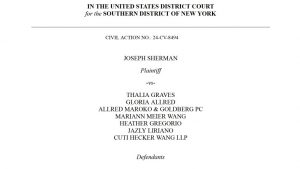
Joseph Sherman, the former bodyguard of music mogul Sean ‘Diddy’ Combs, has filed a civil lawsuit on Friday against Thalia Graves and her attorney Gloria Allred, among others, aiming to address allegations of defamation and emotional distress. This suit, submitted to the Southern District of New York, comes in the wake of a lawsuit initiated on September 24, 2024, by Graves and Allred, which names Sherman as a defendant alongside Combs. In his complaint, Sherman claims to have evidence of Graves attempting to blackmail him, which includes several pages of text messages he received from her.
Sherman contends that he had ceased working for Combs in 1999, asserting he was not present during the alleged rape incident in 2001, an allegation raised by Graves against him and Combs. He asserts he has never even met Graves and claims she sought to manipulate him into providing false testimony, stating in her messages that if he agreed to testify against Diddy, her lawyers would facilitate a favorable outcome for him in his legal matters.
As the lawsuit unfolds, critics have begun questioning whether the actions of Gloria Allred represent a broader pattern of misconduct. Several observers have pointed out that Allred and her daughter, attorney Lisa Bloom, have faced scrutiny in the past regarding their legal motives. Particularly, it has been highlighted that Allred is the first attorney suing Combs to have been counter-sued herself.
The accusations against Allred regarding her close associations raise eyebrows, especially given her past controversies, including ongoing investigations by the State Bar of California. Furthermore, allegations regarding her associations with Mark Geragos, Diddy’s lawyer, have raised concerns about a potential collusion.
Sherman’s attorney, Darnell D. Crosland, commented on the implications of falsely accusing individuals in the context of the Me Too movement, asserting that such claims impact the credibility of legitimate victims. He stressed the necessity for accountability among defendants who make false claims, indicating that financial motivations can harm both the falsely accused and genuine survivors of sexual assault.