In brief
At midnight on 19 July, flooding surged through a remote village in Assam’s Charing area. A 97‑year‑old woman, unable to walk, was lifted onto a banana‑tree trunk and carried across waist‑deep waters to a highway shelter. The rescue illustrates the severity of recent floods that have claimed 100 lives, forced 140,000 people to leave homes, and raised river levels higher than ever before. The story follows Bornali Baruah, a former journalist-turned‑livestock farmer, who lost her home, her animals, and part of her livelihood. It ends with her reflecting on how to rebuild and adapt to a future where floods are no longer a rare shock, but a daily reality.
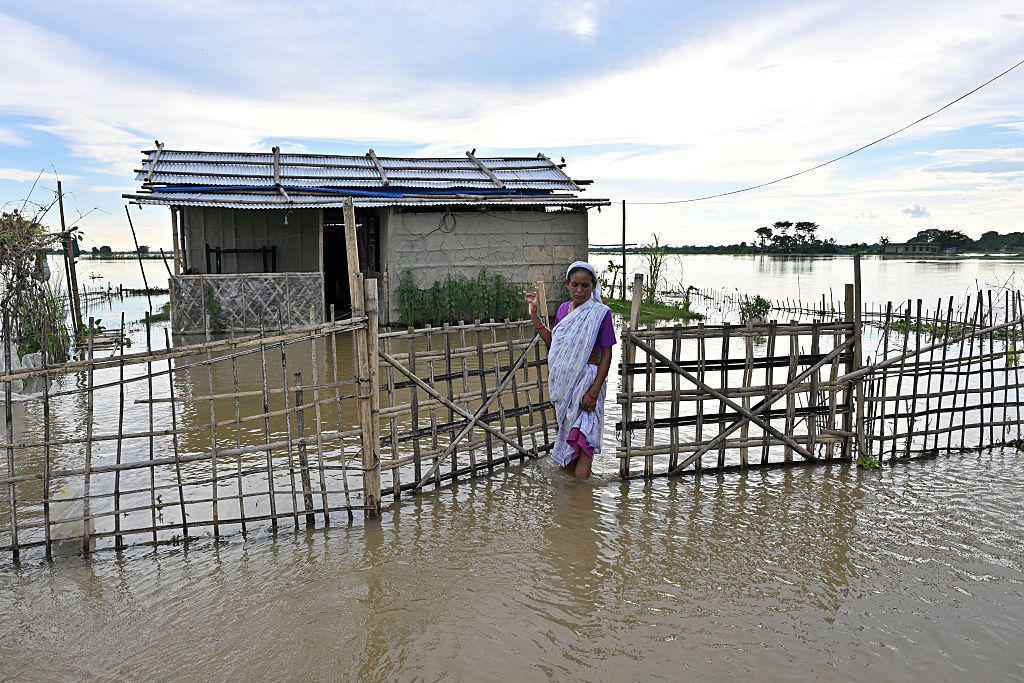
At the break of night on 19 July, rain‑filled rivers cut through the quiet village of Charing in Assam’s Sivasagar district. Floodwaters rushed in at a depth of three to four feet, and the current was so strong that locals could not even walk. In a desperate bid to rescue her mother, a 97‑year‑old woman named Lokada Duarah was lifted onto a makeshift raft made of banana tree trunks, pulled across waist‑deep water, and carried by her husband and a relative. The three finally reached a government shelter camp along a national highway after roughly one hour of floating.
Their ordeal is but one of many that highlight the September‑July flood crisis that has killed 100 people so far and left 140,000 people displaced. In total, 10 districts and 456 villages were destroyed, and more than 19,000 homes were submerged. Relief camps have been set up at 52 sites throughout the state, and 252 additional camps are operating further afield.
Bornali Baruah, 40, was born in Charing and has lived there her whole life. She recalls a major 1950 flood that occurred in the region, but the current deluge surpassed all her memories. Even though the Brahmaputra River flows about 20 kilometres from the village, the flood waters reached the interior of her own home, eventually raising three floors to a height of five feet.
Baruah’s family faced unimaginable losses. Her home suffered from water damage, her livestock—comprising 300 goats, 500 ducks, and 1000 chickens—were lost, and her farm equipment, kitchen and even her laptop were destroyed. None of her animals were insured, which meant the financial burden fell entirely on her family.
After losing her home, she fled to a relief camp, where food and essential supplies were handed out. The camp did not offer electricity or mobile reception, and Baruah could not even recharge her phone. Strangely, strangers that day helped her care for her surviving goats and treat animals that had fallen ill.
Experts say the flood’s severity is a result of a higher frequency and intensity of rainfall in the region, as well as changing river dynamics and human activities such as deforestation and mining. They point out that Assam’s floodplain has become more vulnerable due to unplanned settlements and inadequate infrastructure planning.
When the river breached its banks, its large-scale sediment deposition caused rapid erosion, which threatened areas that were otherwise considered safe. The Brahmaputra River, which originates in Tibet, carries high sediment loads that are further amplified by the coastal geography of Assam.
For Baruah, the physical destruction is coupled with emotional strain. While she has turned back to her home and will not leave Charing, she now faces the reality that there will be more months of heavy rainfall, and she will have to rethink how to prepare for flooding. She plans to raise her home’s foundation and create a safe platform to retreat to in future floods, but she is still uncertain how she will pay for these changes.
When confronted about feeling like a climate refugee, Baruah said, “No. If we regain economic and mental strength, life will return to a normal state.” She concluded that learning to live with floods is essential, and that moving away would only add to her scarcity of resources.