In brief
The recent reinstallation of the statue of Spanish conquistador Francisco Pizarro in Lima has sparked significant controversy. While some view it as a celebration of Peru's history, indigenous leaders and protesters see it as a painful reminder of colonial oppression.
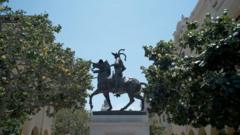
A statue of the Spanish conquistador Francisco Pizarro has returned to the heart of Peru's capital, Lima, after more than two decades of being absent. This reinstallation coincided with the 490th anniversary celebration of the city’s founding, stirring up strong reactions from both supporters and opponents.Unveiled in a ceremony led by Lima's mayor, Rafael López Aliaga, and Isabel Díaz Ayuso, president of the Community of Madrid, the bronze monument depicts Pizarro on horseback, sword in hand. The statue, created by American sculptor Charles Rumsey, was originally dedicated in 1935 to honor Lima's fourth centenary. However, it was moved in 2003 to a park outside the city center due to pressures related to its controversial historical significance and was later damaged from the vibrations caused by passing trains.Supporters of the statue's reinstatement argue that it is essential to acknowledge and preserve history, while indigenous leaders vehemently oppose it, accusing Pizarro of crimes against their cultures. Demonstrators gathered nearby to voice their dissent, with one protester labeling the reinstatement as "an offense to all the indigenous peoples of Peru, Latin America, and the world."Díaz Ayuso characterized the event as recognition of a pivotal moment that transformed the course of history. Nevertheless, the statue's return has reignited a deeply painful conversation about colonial history and its lasting impacts on indigenous communities, highlighting a broader debate on how societies honor their pasts.