

5‑Million‑Year‑Old Whale Graveyard Unearthed Beneath the Indian Ocean
An enormous underwater burial site stretching roughly 1,200 km (745 miles) and carved into a 7‑km deep trench has been revealed by a multinational research team on the seafloor of the Diamantina fracture zone in the southeastern Indian Ocean.
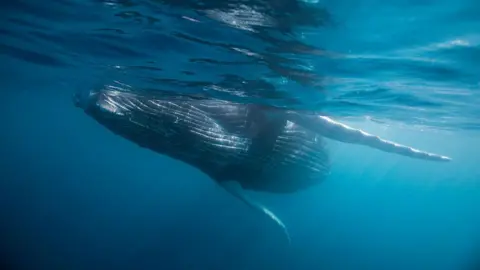
The site, located in the Diamantina fracture zone – a chain of underwater ridges and trenches – contains 485 distinct fossil and active whale‑fall locations. Of particular significance are the remains of a beaked whale skeleton, now dubbed Pterocetus benguelae, dated 5.3 million years old, and a rare 5‑metre‑long Antarctic minke whale carcass.
"Discovering a necropolis of this scale was completely unexpected," said Xiaotong Peng of the Chinese Academy of Sciences. "The sheer distribution, depth, and time span of the remains exceeded what we had imagined."
Scientists also identified a previously unknown species, named Pterocetus diamantinae after the site, and catalogued a diverse community of jellyfish, worms and crustaceans thriving around the buried carcasses. The findings were published in Nature and praised by Stephen J. Godfrey of the Calvert Marine Museum as a “truly unique discovery.”
Experts anticipate that this remote and inaccessible site will yield more surprises, and its existence may spark a new wave of submersible dives into similarly hidden deep‑sea environments.


