In brief
In Timor-Leste, a team of citizen scientists led by marine ecologist Karen Edyvane has documented nearly 3,000 pygmy blue whales over ten years, revealing new insights into their behavior and driving eco-tourism in the region.
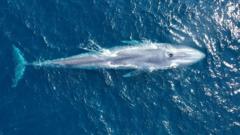
For approximately two months each year, fishermen Faustino Mauloko da Cunha and his son Zacarias venture into the South Pacific Ocean in their dugout canoe, keeping watch for pygmy blue whales. When spotted, a drone, operated by a local team led by Australian marine ecologist Karen Edyvane, is deployed to capture images that contribute to our understanding of these majestic creatures. Despite operating out of a small fishing village called Subaun in Timor-Leste, this initiative is yielding significant findings about one of the largest animals on Earth. Over the past decade, local citizen researchers have recorded nearly 3,000 sightings of pygmy blue whales—an impressive statistic that highlights the region's rich marine biodiversity and the under-explored nature of its waters. Timor-Leste sees a notable influx of pygmy blue whales during their migration from southern Australia to the Banda Sea between October and November. However, studies in this area have been lagging, a gap Prof Edyvane sought to fill with her research program initiated in 2014. Through collaboration with local fishermen, educators, and dive tour operators, the team has not only documented the whales' presence but also observed intimate reproductive behaviors for the first time, such as underwater nursing footage captured in July.Originally launched as a Facebook group to mobilize the community’s efforts, the project has since incorporated modern survey techniques. Locals are actively encouraged to share sightings on social media platforms like Facebook and WhatsApp, leading to real-time updates in whale tracking. This collaborative spirit culminated in the establishment of the first whale-watching tours in 2016, with increasing interest from both locals and tourists.As whale-watching activities grow, so too does tourism in the region. Local dive instructors report that these tours are now fully booked up to two years in advance. However, concerns about unregulated tourism practices have led to calls for sustainable management. The government plans to utilize Edyvane’s research to create policies aimed at protecting marine life while promoting economic opportunities.The presence of the research station at Faustino's home has enhanced the group's operations, allowing constant monitoring and documentation during the peak whale season. This station serves as a hub of knowledge where local student interns learn about marine conservation, with plans for Zacarias to lead educational tours in English for visitors. Edyvane believes that properly managed whale tourism could foster economic development in one of the world’s poorest countries, where average earnings remain low. As the da Cunha family prepares meals for students and tourists, they continue to contribute to both the local economy and environmental stewardship, promising a richer, more engaging experience for future visitors. Through collaborative citizen science, the people of Timor-Leste are revealing the hidden lives of pygmy blue whales while fostering community-based conservation and sustainable tourism.