In brief
The recent directive from Syria's Islamist-led interim government has sparked conversations about women’s rights and cultural norms as the wearing of burkinis becomes mandatory at public beaches and swimming pools.
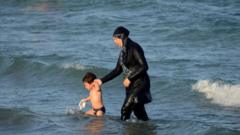
Syria’s Islamist-led interim government has implemented a new decree requiring women to wear burkinis—or other forms of "decent" swimwear that cover the body except for the face, hands, and feet—at public beaches and swimming pools. Issued by the tourism ministry and reported by the state news channel Al-Ikhbariyah al-Suriyah, the guidelines are positioned as efforts to enhance public safety standards and maintain public decency.While women in Syria traditionally opt for modest swimwear, some have chosen more Western-style options in recent years. According to the new regulations, beachgoers are instructed to wear "modest swimwear," specifically burkinis or alternative clothing that provides more body coverage. Additionally, women must don a cover-up or loose clothing over their swimwear while moving to and from swimming areas. The decree also prohibits traveling in swimwear outside the beach without proper covering. Similar restrictions apply to men, who are required to wear shirts outside of swimming zones and are also barred from being bare-chested. The statement noted that “normal Western swimwear” is permissible in exempted venues, falling “within the limits of public taste.” Beyond the immediate directives, the government emphasized that loose attire covering the shoulders and knees should be worn in general, steering clear of transparent and tight clothing. However, the decree has not clarified penalties for non-compliance or enforcement mechanisms.This regulation comes in the wake of significant political changes since December of last year when Islamist rebel forces, led by Ahmed al-Sharaa, toppled Bashar al-Assad's regime, effectively concluding years of civil conflict. Now serving as interim president, Sharaa has pledged to govern inclusively, emphasizing education for women and distancing his administration from regressive policies akin to those found in Afghanistan.In a recent interview, Sharaa reaffirmed his administration's commitment to equality, signing a constitutional declaration that guarantees women's rights alongside freedom of expression and media. As Syria continues its delicate transition, the implications of these new regulations serve not only as a cultural statement but also reflect the ongoing struggle for women’s rights within the nation's evolving political landscape.