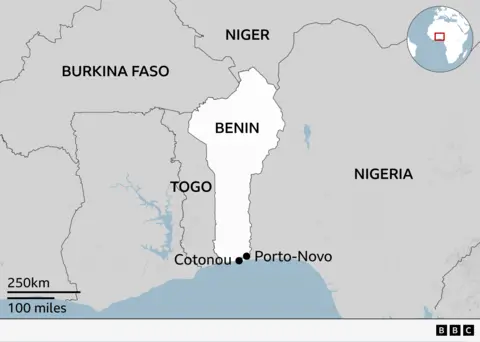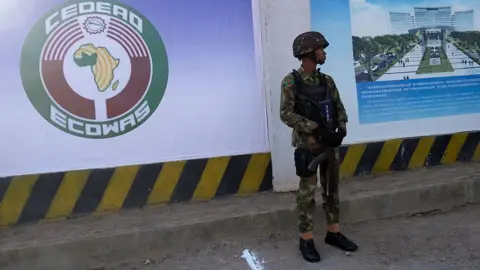
Some 200 West African soldiers, mainly from Nigeria and Ivory Coast, are in Benin to support the government following Sunday's failed coup, Benin's foreign minister has confirmed.
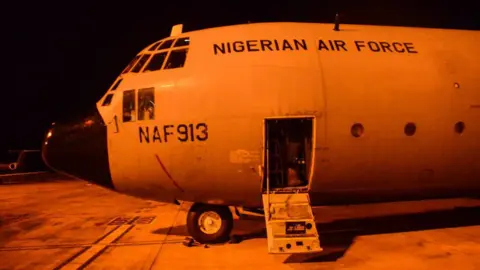
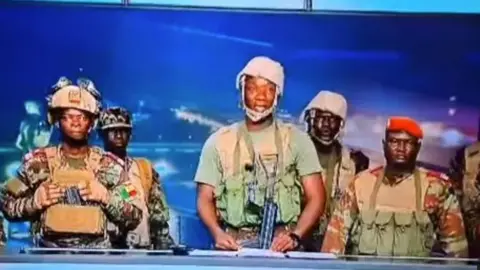
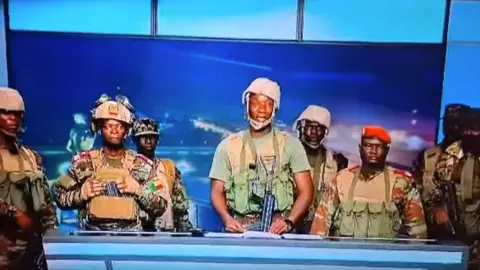
The attempt was foiled after Nigeria deployed fighter jets to drive mutineers out of a military base and state TV headquarters, where they had declared a takeover.
This is the first time officials have stated the number of foreign soldiers deployed to the country, although it remains unclear if some of them have since been withdrawn.
Benin's Foreign Affairs Minister Olushegun Adjadi Bakari announced on Thursday that some of the regional troops sent to assist had stayed in the country as part of the sweep and clean-up operation.
A manhunt for those involved in the plot is underway, with the leader of the failed coup reportedly seeking refuge in neighboring Togo. The rebel soldiers cited concerns over President Patrice Talon's governance and the worsening security situation in northern Benin as justifications for their actions.
The Economic Community of West African States (Ecowas) has deployed troops from Nigeria, Ghana, Sierra Leone, and Ivory Coast to secure key installations and prevent any resurgence of violence.
Nigeria emphasized that their soldiers arrived on Sunday, denouncing the coup attempt as a direct assault on democracy.
An Ivory Coast security source indicated that around 50 soldiers from their country participated in the regional deployment.
According to Bakari, there are currently about 200 soldiers present to assist the Beninese defense and security forces in a coordinated effort following the coup attempt.
Discussions are ongoing regarding the duration of the regional forces' stay, with decisions to be made in collaboration with Benin’s defense entities, which have shown commendable bravery during this crisis.
Under significant pressure from a series of successful coups across West Africa, Ecowas is signaling it intends to confront the military's encroachments on democratic governance.
President Talon, a close ally of the West, is set to step down next year, with elections scheduled for April, amidst rising pressures from insurgency-linked violence near Benin’s northern border.