In brief
The ongoing violence adds to the suffering of a nation already grappling with political unrest and crisis management post-earthquake.
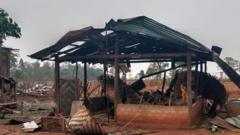
Myanmar's military junta has ramped up air strikes in various regions following a catastrophic 7.7 magnitude earthquake that devastated parts of the country, leading to over 1,600 fatalities. Images from Naung Lin Village in Shan state depict destruction as junta forces reportedly dropped bombs on Friday evening, further complicating rescue efforts, according to eyewitness accounts relayed to the BBC.UN officials have condemned these military actions as "completely outrageous and unacceptable," highlighting the distressing scenario of bombings continuing amid rescue operations. Tom Andrews, the UN Special Rapporteur, expressed disbelief that the military could justify such actions. He called for immediate cessation of military operations, urging those with influence over the junta to exert pressure for peace.Pro-democracy rebel groups have reported aerial bombardments primarily in Chang-U township, the quake's epicenter in Sagaing. In response to the devastation, the National Unity Government (NUG), representing the ousted civilian administration, announced a halt to offensive military operations for two weeks, emphasizing only defensive actions in earthquake-affected regions.The aftershocks of the earthquake were felt in neighboring countries, with significant destruction reported in Mandalay and Nay Pyi Taw. The junta has confirmed 1,644 deaths, and the situation remains critical, with many individuals still trapped under rubble.Compounding the tragedy is Myanmar's ongoing civil strife that erupted after a military coup four years ago, which led to massive protests demanding the restoration of civilian governance. This has since evolved into a widespread insurgency against junta control. An investigation suggests the junta currently holds less than a quarter of Myanmar, while resistance groups dominate significant territories.The junta's reliance on aerial assaults to suppress resistance stems from its increasing territorial losses. Dealings with Russia and China have bolstered the junta’s military capabilities, with ongoing support despite international calls for an arms embargo. Critics suspect these nations' humanitarian assistance may also be swayed by their military ties, further complicating the humanitarian situation.Concerns are also rising about the military potentially utilizing disaster relief as a tactical weapon, with historical precedence showing that aid is often withheld from areas controlled by opposition forces. Tom Andrews remarked on this concerning pattern, predicting that the junta would likely obstruct efforts to deliver aid effectively, impairing recovery initiatives for those in dire need.The cumulative effects of a battered nation, both from natural disaster and human violence, place Myanmar in a precarious state as the world watches with concern.