In brief
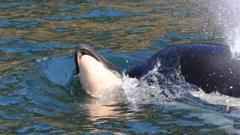
Tahlequah, a Southern Resident killer whale, has once again captured public sympathy as she mourns the loss of her calf near Washington state. This follows her infamous display of grief five years ago, marking a tragic moment for the endangered species.
Tahlequah, the striking killer whale who captured global attention in 2018 for pushing her deceased newborn calf for an astounding 17 days, appears to be grieving once again. Recent reports from the Center for Whale Research reveal that Tahlequah has now lost another calf and is seen pushing the body along the waters off the coast of Washington state.In 2018, her lengthy display of carrying her dead calf became a record-breaking event, demonstrating the deep emotional ties that orcas share with their offspring. The Center stated that while any calf’s death is a profound loss, the demise of her newborn is particularly devastating given the whale's poignant history.Tahlequah, one of the Southern Resident killer whales, has now lost two out of her four documented calves, both of which were female. This is an alarming development as Southern Resident killer whales are classified as endangered in both Canada and the U.S.The continued decline of Chinook salmon, the primary food source for these whales, significantly impacts their ability to reproduce successfully. Research conducted by the University of Washington indicates that failures in reproduction are closely tied to nutritional access and the dwindling availability of these key fish. With the capacity to travel an average of 120 kilometers (75 miles) per day, Tahlequah's journey of grief resonates throughout the waters. Her previous and present occurrences reflect not only personal loss but also the broader struggles of an endangered species facing critical challenges for survival.